Author: Site Editor Publish Time: 2026-07-17 Origin: Site
Securing critical infrastructure, national borders, and expansive perimeters requires zero-fail detection capabilities. Standard optical cameras often fail in these environments due to low visibility, complete darkness, or challenging weather patterns. Selecting the wrong thermal imaging technology leads to high false alarm rates, missed intrusions at critical distances, or unsustainable maintenance requirements that drain operational resources. Facility managers and security directors must understand the distinct physical differences between sensor types before deploying hardware to the field. Evaluating the technical and practical trade-offs between a cooled thermal camera and an uncooled system requires analyzing detection range, thermal sensitivity, motion capture, and spectral bands. Making an informed choice ensures perimeter integrity while aligning with long-term site maintenance capabilities and environmental constraints.
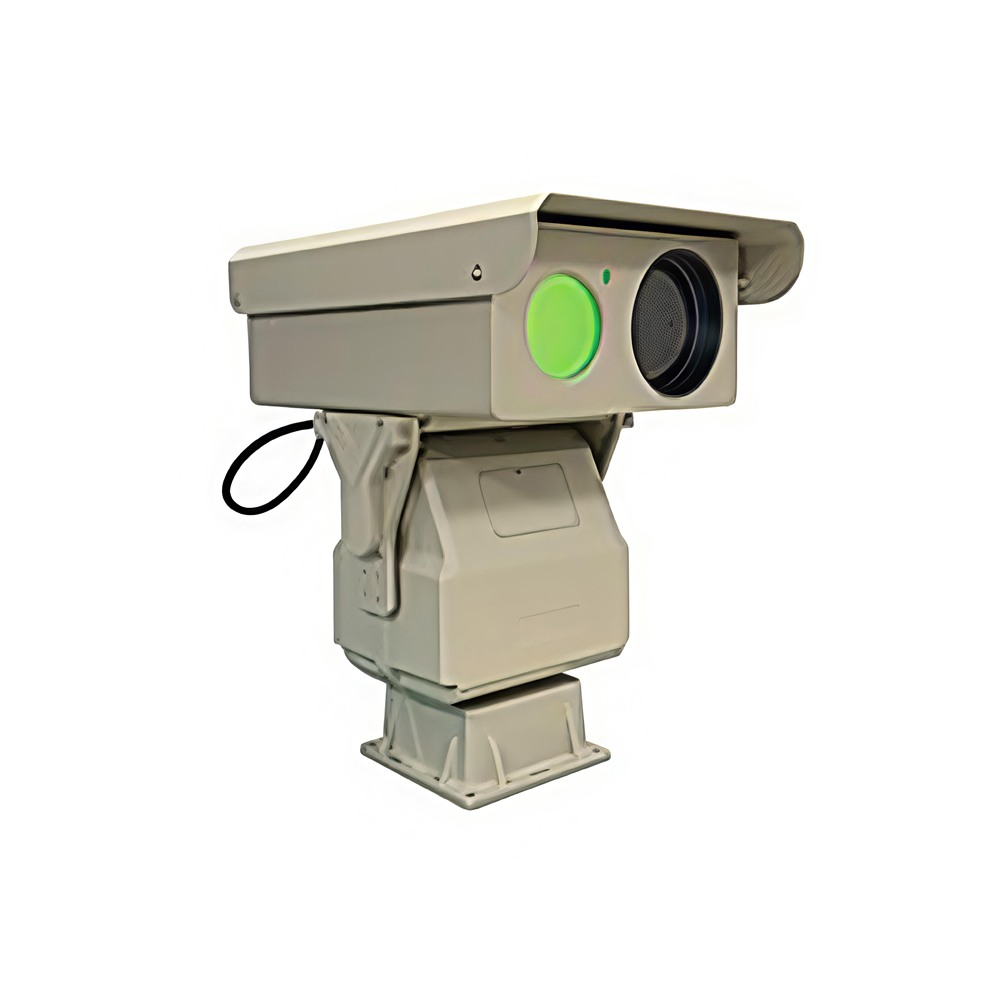
A cooled thermal camera utilizes an integrated cryocooler to eliminate internal thermal noise, offering superior thermal sensitivity (NETD), longer duration stability, and multi-kilometer detection ranges.
Uncooled systems (microbolometers) provide significantly lower lifecycle expenses and require zero sensor maintenance, but sacrifice extreme long-range clarity, high frame rates, and fast-motion capture capabilities.
Decision criteria hinge on operational requirements: Mid-Wave Infrared (MWIR) cooled cameras are critical for extreme distances and high-humidity environments, while Long-Wave Infrared (LWIR) uncooled cameras excel in mid-range, low-maintenance deployments.
Cooled systems are uniquely capable of specialized imaging (such as spectral filtering for gas detection or smoke penetration) and eliminate thermal drift/calibration freezes.
Procurement models must account for cooler degradation; cooled systems typically require cryocooler servicing or replacement every 10,000 to 20,000 operational hours.
Security professionals rely on the Johnson Criteria to establish objective performance baselines for thermal imaging systems. This standard defines the number of pixels required on a target to achieve Detection, Recognition, and Identification (DRI). Detection requires 1.5 pixels, recognition demands 6 pixels, and identification necessitates 12 pixels across the critical dimension of the target. When surveillance requirements extend beyond two to five kilometers, achieving these pixel densities becomes a severe optical and thermal challenge. Uncooled sensors quickly lose the ability to resolve targets at these distances without relying on massive, impractical lenses. Conversely, a cooled thermal camera maintains high resolution and pixel density at extreme ranges, allowing operators to identify a human or vehicle at distances exceeding ten kilometers.
Field deployments often reveal the stark contrast between theoretical specifications and actual performance. A standard uncooled camera might detect a vehicle at three kilometers under perfect conditions, but recognizing whether that vehicle is a civilian truck or a military transport requires significantly more pixels on target. Cooled systems utilize smaller pixel pitches—often down to 10 or 12 microns—allowing them to pack more pixels into the same physical sensor area. This density directly translates to extended DRI ranges, making them the default standard for border patrol and coastal monitoring stations.
| Performance Metric (Human Target 1.8m) | Uncooled Thermal Camera (Standard Lens) | Cooled Thermal Camera (Long-Range Lens) |
|---|---|---|
| Detection (1.5 Pixels) | Up to 3 km | 15+ km |
| Recognition (6 Pixels) | Up to 1 km | 5+ km |
| Identification (12 Pixels) | Under 500 meters | 3+ km |
Thermal energy does not travel through the atmosphere unimpeded. Atmospheric attenuation, driven by humidity, dust, smoke, and precipitation, scatters and absorbs infrared radiation. High absolute humidity severely degrades thermal contrast, effectively blinding lesser sensors. Water vapor absorbs infrared energy heavily in certain bands, meaning coastal or tropical deployments face constant signal degradation. Furthermore, thermal crossover periods—typically occurring at dawn and dusk—present unique challenges. During these windows, the temperature of background objects matches the temperature of potential targets, resulting in a washed-out image with zero contrast.
High-performance sensors with exceptional thermal sensitivity are mandatory to detect the minute temperature variations that persist during crossover events or heavy atmospheric attenuation. Field technicians often observe that uncooled cameras become virtually useless during heavy rainstorms or dense marine fog. The thermal energy simply cannot penetrate the water droplets to reach the microbolometer. Cooled systems, operating primarily in the MWIR band, demonstrate superior transmission through high-humidity environments, maintaining operational visibility when uncooled systems fail.
Baseline deployment requirements dictate the necessary sensor technology. Tracking a walking perimeter intruder demands vastly different specifications than engaging a fast-moving drone in a Counter-UAS (Unmanned Aerial Systems) application. Fast-moving targets require high frame rates and ultra-fast integration times to prevent motion blur. Specialized maritime border security operations demand sensors capable of cutting through dense sea spray and marine layer fog. Additionally, industrial facilities often require optical gas imaging to detect volatile organic compound leaks.
Integrating thermal feeds with automated radar tracking systems also necessitates zero-latency, high-resolution video streams to ensure precise slew-to-cue functionality. When a ground surveillance radar detects an anomaly at eight kilometers, it sends coordinates to the camera's pan-tilt unit. The camera must snap to that location and immediately provide a clear image for the operator to classify the threat. If the camera relies on an uncooled sensor, the resulting image at that distance will likely be a single, indistinguishable pixel. A cooled system provides the necessary optical zoom and clarity to classify the radar track instantly.
The defining characteristic of a cooled system is its integrated cryogenic cooler, typically a Stirling engine. This mechanism actively chills the internal sensor down to cryogenic temperatures, usually around 77 Kelvin (-196°C). Cooling the detector drastically reduces thermally induced dark current—the internal heat generated by the sensor electronics themselves. By eliminating this self-generated noise, the sensor becomes exponentially more sensitive to external thermal radiation. These systems primarily detect photons in the Mid-Wave Infrared (MWIR) band (3–5 µm), though specialized configurations operate in the Cooled Long-Wave Infrared (LWIR) band (8–12 µm).
This photon-counting methodology allows for rapid integration times and unparalleled image crispness. The internal mechanics require precision engineering. The sensor array sits inside a vacuum-sealed Dewar flask to maintain the cryogenic temperatures and prevent condensation. The Stirling cooler uses compressed helium gas to draw heat away from the sensor array continuously. This active cooling process is what gives the camera its incredible sensitivity, but it also introduces moving mechanical parts into the system architecture.
Uncooled thermal imagers rely on microbolometer technology. Instead of counting individual photons, a microbolometer measures minute changes in electrical resistance caused by the absorption of infrared heat. These sensors operate at ambient temperatures without any active cooling mechanisms, relying entirely on the incoming thermal energy to heat the individual pixels. Uncooled cameras primarily operate in the Long-Wave Infrared (LWIR) band (8–14 µm). While this technology has advanced significantly, the fundamental reliance on heat absorption rather than photon detection inherently limits its sensitivity, integration speed, and overall resolution compared to actively cooled alternatives.
The manufacturing process for microbolometers involves creating microscopic bridges of vanadium oxide or amorphous silicon. When infrared radiation strikes these bridges, their temperature changes slightly, altering their electrical resistance. The camera's readout integrated circuit (ROIC) measures these resistance changes and translates them into a visible video feed. Because they do not require vacuum Dewars or mechanical coolers, uncooled cameras are solid-state devices. This solid-state nature makes them highly durable and completely maintenance-free at the sensor level.
Optical physics heavily favors cooled systems for long-range applications. A cooled thermal camera supports continuous optical zoom and massive focal lengths—often exceeding 1000mm—without sacrificing f-number efficiency or image brightness. The smaller pixel pitch and high sensitivity of the cooled sensor allow engineers to design compact, highly efficient continuous zoom lenses. In stark contrast, uncooled lenses become prohibitively large, heavy, and difficult to manufacture at extreme focal lengths.
The optical speed limits of uncooled microbolometers mean that a lens designed to see 10 kilometers would require a massive piece of germanium, making the system physically unwieldy and operationally impractical for most mounting structures. Germanium is the primary material used for thermal lenses because standard glass blocks infrared radiation. Germanium is heavy and highly expensive. Building a 1000mm lens for an uncooled LWIR sensor would require a front germanium element so large and heavy that standard pan-tilt motors could not move it. Cooled MWIR systems use different optical materials, such as silicon or sapphire, which are lighter and allow for complex, multi-element continuous zoom lens designs.
Noise Equivalent Temperature Difference (NETD) measures a sensor's ability to distinguish between tiny differences in thermal radiation. Lower numbers indicate better performance. Cooled sensors routinely achieve NETD ratings below 20 millikelvins (mK), while top-tier uncooled sensors hover around 40 to 50 mK. This sensitivity gap translates directly into operational superiority during low thermal contrast events like heavy fog, driving rain, or high humidity.
Furthermore, uncooled microbolometers suffer from thermal drift. As ambient temperatures fluctuate throughout the day, the uncooled sensor's baseline resistance changes. To compensate, the camera must perform a Non-Uniformity Correction (NUC). This process drops a physical mechanical shutter in front of the sensor to recalibrate, causing the video feed to freeze momentarily. A cooled system maintains absolute thermal stability internally, completely eliminating thermal drift and the need for disruptive NUC shutter freezes during critical observation periods. In a live tracking scenario, a NUC freeze lasting even half a second can cause an operator to lose a fast-moving target.
| Feature | Cooled Thermal Camera | Uncooled Thermal Camera |
|---|---|---|
| NETD Sensitivity | < 20 mK | 40 - 50 mK |
| Thermal Drift | None (Maintained by Cryocooler) | High (Requires NUC) |
| Video Interruption | Continuous Feed | Periodic Freezes (NUC Shutter) |
| Integration Time | Microseconds | Milliseconds |
Integration time—the duration the sensor gathers light per frame—dictates motion capture performance. Cooled sensors operate with integration times measured in microseconds. Uncooled sensors require milliseconds to absorb enough heat to register an image. This fundamental difference allows cooled systems to achieve exceptionally high frame rates, ranging from 120Hz to over 240Hz. Standard uncooled security feeds typically cap at 30Hz or 60Hz.
When tracking fast-moving targets like drones, aircraft, or speeding vehicles, the microsecond integration of a cooled sensor prevents motion blur and smearing. This crisp, high-speed imagery is vital for precise synchronization with automated defense systems and advanced video analytics. If a camera is mounted on a moving platform, such as a naval vessel or a ground vehicle, the high frame rate and fast integration time of a cooled sensor compensate for the platform's vibration and movement, delivering a stabilized, clear image to the operator.
The extreme sensitivity of cooled sensors permits the integration of narrow-band spectral filters. Operators can place specific filters in front of the chilled detector to isolate exact wavelengths of infrared energy. This capability is the foundation of Optical Gas Imaging (OGI), allowing facilities to visualize invisible hydrocarbon leaks, sulfur hexafluoride, or other dangerous gases. Spectral filtering also enables operators to tune the camera to penetrate dense atmospheric barriers, such as specific types of smoke or chemical plumes, providing situational awareness in environments where broadband thermal cameras and standard optical sensors are completely blind.
Uncooled sensors lack the sensitivity to utilize narrow-band filters effectively. Placing a filter in front of a microbolometer blocks too much incoming thermal energy, resulting in a completely dark image. Cooled systems have the excess sensitivity required to sacrifice some incoming light in exchange for isolating specific spectral bands. This makes them indispensable for industrial safety monitoring, environmental compliance, and specialized military applications where seeing through specific obscurants is a tactical necessity.
Evaluating the deployment of these technologies requires understanding their distinct lifecycle models. Uncooled systems operate on a "run-to-failure" model. Because they lack moving parts like cryocoolers, they require virtually zero internal maintenance over their operational lifespan. Once installed on a perimeter fence or building exterior, they run continuously until the electronics eventually fail years later. Cooled systems, however, require dedicated maintenance schedules. The Stirling engines that chill the sensors endure constant mechanical wear.
Organizations must factor the logistics of cryocooler rebuilds or replacements into their long-term operational planning to ensure continuous perimeter security without unexpected downtime. A typical rotary cooler will require factory servicing every two to three years of continuous operation. This servicing involves removing the camera from the field, shipping it to a specialized facility, breaking the vacuum seal, replacing the mechanical cooler components, re-sealing the Dewar, and recalibrating the sensor. Site managers must maintain spare units to swap into position while the primary camera undergoes maintenance.
Size, Weight, and Power (SWaP) limitations dictate where and how cameras can be deployed. While cooled sensors allow for smaller long-range lenses, the internal cooling mechanism adds baseline weight and requires a continuous power draw to maintain cryogenic temperatures. This makes them highly suitable for fixed mast mounts, mobile command vehicles, and naval vessels with robust power generation. The power draw spikes during the initial cool-down phase when the camera is first turned on, requiring power supplies capable of handling the surge.
Uncooled systems draw significantly less power and are generally lighter, making them the preferred choice for remote solar-powered deployments, tactical drones, and covert installations where power budgets are strictly limited. An uncooled camera can run off a small solar panel and battery bank indefinitely. Deploying a cooled system in a remote, off-grid location requires a massive solar array and battery enclosure to support the continuous operation of the Stirling cooler, drastically increasing the physical footprint and complexity of the installation.
The primary implementation risk for high-end thermal surveillance is the Mean Time Between Failures (MTBF) of the cryocooler. Standard rotary coolers typically operate for 10,000 to 20,000 hours before requiring factory service. If a cooler fails, the camera cannot produce an image. To mitigate this risk, security integrators must implement rigid preventative maintenance schedules. Maintaining hot-swap spare units ensures zero downtime during servicing.
Additionally, specifying cameras equipped with advanced linear coolers can extend the MTBF significantly, stretching the maintenance intervals and improving overall system reliability. Linear coolers use a different mechanical design that reduces internal friction, pushing the operational lifespan closer to 30,000 hours. While cameras with linear coolers require a higher initial investment, the extended time between service intervals reduces the logistical burden on the maintenance team and decreases the frequency of climbing towers to swap hardware.
Physical deployment environments introduce specific risks to both technologies. Cryocoolers are sensitive to extreme, continuous vibration. If mounted on heavy machinery, bridges, or poorly stabilized masts, the vibration can prematurely degrade the cooler's internal seals. Proper mechanical isolation mounts are required to mitigate this wear. Installers must use heavy-duty pan-tilt units and vibration-damping brackets to isolate the camera housing from the mounting structure.
Conversely, uncooled microbolometers face severe risks from solar damage. Pointing an uncooled sensor directly at the sun can permanently burn the microbolometer array, destroying the camera. The intense thermal energy of the sun focuses through the lens directly onto the sensor, melting the microscopic vanadium oxide bridges. Mitigating solar damage requires strict installation angles, software-based sun-avoidance algorithms, or physical fail-safe shutters that deploy when intense radiation is detected. Installers must carefully program the pan-tilt limits to ensure the camera never tracks above the horizon during daylight hours.
Deploying the correct thermal imaging technology dictates the success or failure of long-range perimeter security. A cooled thermal camera remains the mandatory standard for environments requiring DRI distances beyond five kilometers, high-speed target tracking, and operation in heavy humidity. Uncooled systems provide highly reliable, zero-maintenance surveillance for mid-range applications where extreme resolution is secondary to power efficiency and ease of deployment.
For security managers demanding zero-compromise precision and military-grade durability, partnering with an industry leader is essential.Ryanis a leading developer and manufacturer of advanced electro-optical and thermal imaging surveillance payloads. They specialize in engineering high-performance cooled and uncooled camera systems designed to operate flawlessly in extreme border security, maritime monitoring, and counter-UAS applications, providing reliable round-the-clock defense when failure is not an option.
To ensure optimal system selection, execute the following steps:
Conduct a comprehensive site survey to map exact DRI distance requirements across all perimeter zones.
Request specific DRI performance charts from manufacturers based on your local atmospheric conditions and weather models.
Evaluate your existing power infrastructure to confirm it can support the continuous draw of actively cooled systems.
Schedule live field tests during thermal crossover periods to observe sensor performance under the most challenging conditions.
A: A high-performance cooled system paired with extreme focal length continuous zoom lenses can detect large targets, such as vehicles or vessels, at distances exceeding 20 kilometers, depending on atmospheric conditions and target contrast.
A: Most standard rotary Stirling cryocoolers have a Mean Time Between Failures (MTBF) of 10,000 to 20,000 operational hours. Advanced linear coolers can extend this lifespan to 30,000 hours before requiring factory rebuilds.
A: Uncooled microbolometers are most sensitive to the ambient heat radiation abundant in the LWIR band (8-14 µm). Cooled sensors eliminate internal noise, allowing them to detect the higher-energy, shorter-wavelength photons in the MWIR band (3-5 µm) for sharper imaging.
A: Thermal drift occurs when an uncooled sensor's temperature fluctuates, requiring a mechanical shutter to drop and recalibrate the image (NUC). Cooled cameras maintain a constant internal cryogenic temperature, eliminating drift and the need for disruptive shutter pauses.
A: No. Heavy fog and rain severely attenuate thermal energy. The superior thermal sensitivity (lower NETD) of a cooled system allows it to detect the faint thermal contrast that makes it through the precipitation, outperforming uncooled sensors.
A: Noise Equivalent Temperature Difference (NETD) measures the smallest temperature difference a sensor can detect. A lower NETD means higher sensitivity, resulting in clearer, higher-contrast images during poor weather and long-range observations.