Author: Site Editor Publish Time: 2026-07-17 Origin: Site
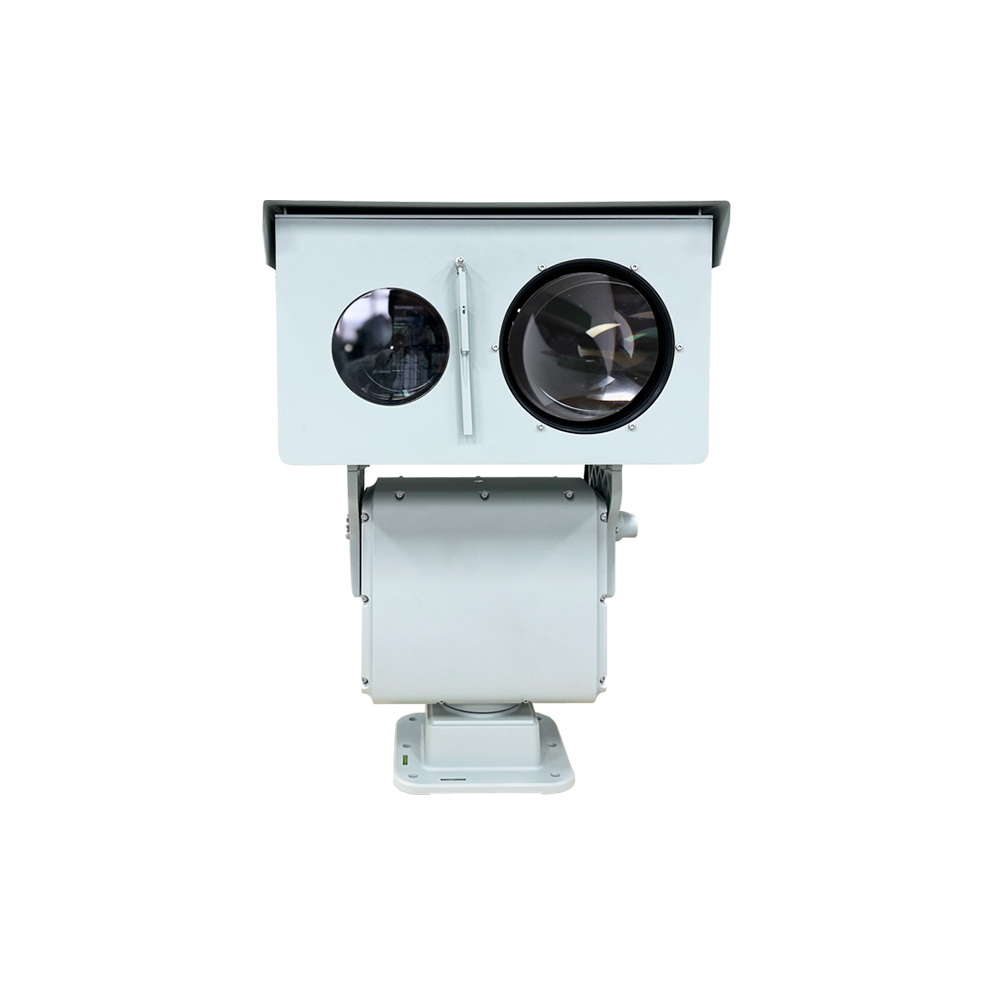
Standard optical security systems routinely fail in zero-light conditions, dense weather, or when tasked with monitoring vast, featureless perimeters. Securing critical infrastructure requires identifying threats at distances that allow for proactive response. Relying on fixed cameras or standard optical PTZs often results in high false alarm rates, missed intrusions, and reactive rather than preventative security postures. Deploying a high-performance thermal PTZ camera bridges the gap between static perimeter detection and active, long-range target tracking. This guide breaks down the technical criteria, sensor categories, and implementation realities required to select the right system for enterprise and industrial applications.
DRI Metrics Over Raw Range: A camera marketed with a "30km range" refers to basic detection; actual recognition and identification (DRI) ranges are significantly shorter and dictate operational utility.
Sensor Selection Dictates Maintenance: The choice between uncooled microbolometers and cryogenically cooled sensors fundamentally alters maximum effective range and ongoing maintenance schedules.
Dual-Spectrum Necessity: Relying solely on thermal imaging limits evidentiary value; dual-spectrum (bi-spectral) systems pair thermal detection with high-zoom optical sensors for visual verification.
Integration is Mandatory: A thermal PTZ camera reaches its full potential only when integrated with edge analytics, radar, or fiber-optic sensors for automated "slew-to-cue" target tracking.
Fixed thermal cameras excel at establishing static tripwires along fence lines. They monitor specific, narrow fields of view. However, they cannot follow moving targets once an intrusion occurs. A thermal PTZ camera solves this operational gap. It provides continuous 360-degree scanning, automated patrol monitoring, and active target tracking. Security operators gain continuous visibility of an intruder's path across massive sites.
Optical cameras rely entirely on visible light. They fail in complete darkness. Intruders using camouflage or hiding in dense foliage easily defeat standard optical sensors. Blinding light from vehicle headlights or low-angle sun glare also washes out optical feeds. Thermal heat signature detection ignores these visual obstacles. It captures the infrared radiation emitted by all objects. This ensures consistent detection regardless of lighting conditions or visual obstructions.
To fully understand the operational shift, consider the standard response protocol when a fixed camera detects motion. The operator must manually locate the target on a separate PTZ camera. This manual handoff takes seconds, during which a fast-moving target can disappear behind buildings or terrain. Automated tracking eliminates this delay. The system locks onto the heat signature and follows it autonomously.
Furthermore, optical systems require external illumination to function at night. Installing high-mast LED lighting along a twenty-kilometer perimeter is logistically complex and draws massive amounts of power. Thermal imaging eliminates the need for artificial lighting. The environment itself provides the necessary radiation for the sensor to generate a high-contrast image.
Modern thermal systems serve dual purposes. They handle physical security while enabling preventative maintenance. Radiometric thermal cameras continuously monitor surface temperatures across industrial sites. This transforms a security device into an asset protection tool.
Operators use these cameras to detect thermal anomalies before catastrophic failures occur. Common applications include identifying overheating substation transformers, spotting localized industrial hot spots, and detecting early-stage fire hazards in waste management facilities. The same camera that detects a perimeter breach at night can monitor critical machinery temperatures during the day.
Implementing radiometric monitoring requires configuring specific temperature thresholds within the camera's software. Operators define regions of interest (ROIs) over critical equipment. If the surface temperature within an ROI exceeds the defined limit, the camera triggers an alarm. This allows maintenance teams to address failing bearings, loose electrical connections, or degrading insulation before they cause unplanned downtime.
The integration of security and condition monitoring maximizes the utility of the hardware. A single device mounted on a high vantage point can scan the perimeter for unauthorized personnel and then pan to a storage tank to verify its external temperature profile. This dual functionality is particularly valuable in remote oil and gas facilities, solar farms, and chemical processing plants.
Effective perimeter protection requires matching detection distances to security response times. If a facility requires ten minutes to dispatch a guard to a remote fence line, the camera must detect the intruder far beyond that ten-minute walking radius. Range dictates reaction time.
False alarm reduction represents another critical success metric. A system generating constant alerts causes operator fatigue. The camera must filter out wildlife, moving vegetation, and weather anomalies. It must achieve this without missing actual human or vehicular threats. High thermal sensitivity paired with intelligent analytics ensures reliable threat classification.
Security directors must establish clear performance baselines before deployment. These baselines should define the minimum acceptable detection range for specific target types under worst-case environmental conditions. Testing must occur during heavy rain or fog, not just on clear nights. A system that performs flawlessly in a laboratory setting often struggles when deployed in a humid, coastal environment.
Success also depends on seamless integration with the existing Video Management System (VMS). The camera must transmit video, metadata, and alarm triggers using standard protocols like ONVIF Profile S and T. Proprietary integrations lock facilities into single-vendor ecosystems and complicate future upgrades. Open-architecture compatibility ensures the thermal system can communicate with third-party analytics engines and access control platforms.
Thermal sensors fall into two primary categories. Uncooled microbolometers operate at ambient temperatures. They require less maintenance and offer excellent reliability. These sensors are highly effective for short to medium-range applications. They typically detect targets up to three to five kilometers away.
Uncooled sensors utilize materials like Vanadium Oxide (VOx) or Amorphous Silicon (a-Si). These materials change electrical resistance when exposed to infrared radiation. The camera measures these minute resistance changes to construct the thermal image. Because they lack moving parts, uncooled sensors boast long lifespans and high mean time between failures (MTBF). They represent the standard choice for commercial perimeters, airports, and utility substations.
Cryogenically cooled sensors operate differently. An integrated cryocooler reduces the sensor temperature to extremely low levels, typically around 77 Kelvin. This dramatically increases thermal sensitivity (NETD) and reduces thermal noise. Cooled sensors are mandatory for extreme long-range detection. They can identify targets from ten to over thirty kilometers away.
However, cooled systems require strict maintenance. The internal mechanical cooler relies on moving parts and helium gas. These components degrade over time. The cooler typically requires rebuilding or replacement every 10,000 to 15,000 operational hours. This maintenance requirement necessitates removing the camera from service and shipping it to a specialized facility. Facilities deploying cooled cameras must maintain spare units to ensure continuous coverage during these service intervals.
| Feature | Uncooled Microbolometers | Cryogenically Cooled Sensors |
|---|---|---|
| Operating Temperature | Ambient | Cryogenic (approx. 77K) |
| Detection Range | Short to Medium (Up to 5km) | Extreme Long-Range (10km - 30km+) |
| Thermal Sensitivity (NETD) | Moderate (Typically <40mK) | High (Typically <20mK) |
| Maintenance Needs | Low (Solid-state design) | High (Cooler rebuilds required) |
| Primary Application | Commercial perimeters, substations | Border security, coastal security |
Relying exclusively on thermal imaging limits situational awareness. Thermal feeds show heat signatures but lack visual details like clothing colors, license plates, or facial features. Dual-spectrum configurations solve this limitation. They combine a thermal imager with a high-zoom optical lens in a single housing.
The thermal sensor provides initial detection regardless of lighting. The optical sensor allows for visual identification and evidentiary recording. Bore-aligned sensors represent the highest engineering standard for these systems. Bore-alignment ensures both lenses look at the exact same point in space. Operators can seamlessly switch between thermal and optical feeds without losing the target during active tracking.
During a security event, the workflow relies on both sensors. The thermal camera detects a heat signature moving along a dark fence line at three kilometers. The system automatically slews to the target. The operator views the thermal feed to confirm the presence of a human. As the target moves closer or enters an illuminated area, the operator switches to the optical feed. The optical camera, equipped with a 40x or 60x zoom lens, captures the necessary details for law enforcement identification.
This dual-sensor approach also aids in threat assessment. A thermal camera might detect a vehicle parked near a critical gate. The optical camera allows the operator to read the license plate or identify the company logo on the side of the truck. This visual confirmation prevents unnecessary security dispatches for authorized maintenance vehicles or delivery trucks.
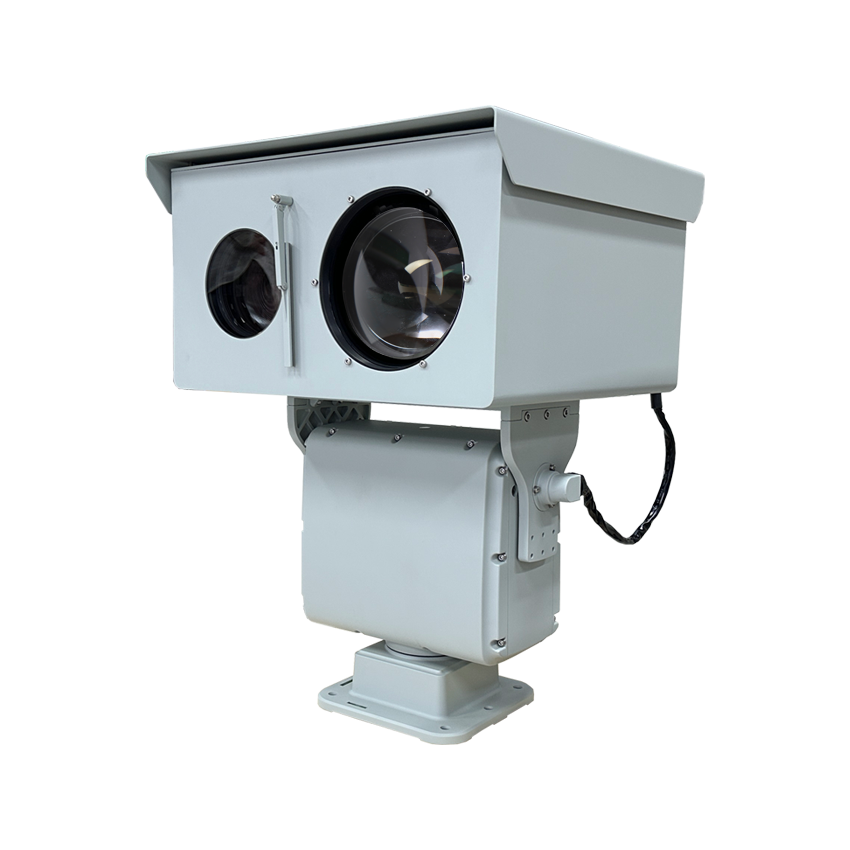
Continuous 360-degree panning allows a single camera to monitor vast areas. Operators can configure pre-programmed patrol routes. The camera moves between specific presets, pausing to analyze each zone. This automates perimeter scanning and reduces the need for manual operator control.
Advanced systems balance active guard tours with dynamic interrupt capabilities. If a target triggers a ground sensor or crosses an analytics boundary, the camera interrupts its patrol. It immediately pans to the intrusion zone, tracks the target, and alerts the operator. Once the event resolves, the camera resumes its programmed tour.
Configuring effective guard tours requires strategic planning. A tour that moves too quickly prevents the edge analytics from processing the scene. The camera must pause at each preset for several seconds to allow the AI algorithms to analyze the frame for human or vehicular shapes. A typical tour might include eight presets, covering a 360-degree view, with a five-second dwell time at each location.
Operators must also define priority zones. A main entrance gate requires more frequent monitoring than a secondary fence line bordered by a swamp. The guard tour programming should reflect these priorities, returning to high-risk presets more often during the cycle. This intelligent scanning approach maximizes the probability of detecting an intrusion while minimizing the total number of cameras required to secure the site.
Evaluating camera performance requires understanding Johnson’s Criteria. This standard defines the number of pixels required on a target to achieve specific tasks. Detection means knowing an object is present. Recognition means determining the object type, such as a human versus a vehicle. Identification means distinguishing specific details, like identifying a specific person or military vehicle.
Lens focal lengths directly impact DRI metrics. A 50mm lens provides a wider field of view but shorter range. A continuous optical zoom lens offers flexibility. Never rely on manufacturer "maximum range" claims. These usually refer only to basic detection under ideal conditions. For example, a mid-range uncooled 100mm lens configuration might achieve human detection at 4.2 kilometers and vehicle detection at 12.8 kilometers. In contrast, cryogenically cooled configurations can push these limits up to thirty kilometers.
To apply Johnson's Criteria practically, consider the pixel requirements. Detection typically requires 1.5 pixels across the critical dimension of the target. Recognition requires 6 pixels. Identification requires 12 pixels. A thermal camera might detect a human at five kilometers, but it will only display a single, glowing pixel. The operator will know something is there, but cannot determine if it is a person, a deer, or a heated exhaust vent.
Recognition range is the most critical metric for perimeter security. Operators must know if the detected heat signature is a threat. If a facility requires human recognition at two kilometers, the camera and lens combination must deliver at least 6 pixels across a 0.75-meter target at that distance. Security consultants use specialized software calculators to determine the exact focal length and sensor resolution required to meet these specific DRI goals.
| Task | Pixels on Target (Critical Dimension) | Operational Meaning |
|---|---|---|
| Detection | 1.5 Pixels | An object is present against the background. |
| Recognition | 6 Pixels | The object class is determined (e.g., human vs. vehicle). |
| Identification | 12 Pixels | Specific details are visible (e.g., specific vehicle type). |
AI-driven edge analytics transform passive video into active intelligence. The camera processes video directly on the device. It classifies targets, distinguishing between humans, vehicles, and drones. This classification minimizes nuisance alarms caused by animals or moving trees.
Slew-to-cue integration represents a critical capability for long-range tracking. A thermal PTZ camera must communicate with other security layers. When ground radar, buried seismic sensors, or fixed perimeter cameras detect an anomaly, they send coordinates to the PTZ. The camera automatically pans, tilts, and zooms to those exact coordinates. It locks onto the target and begins auto-tracking without human intervention.
The auto-tracking algorithms rely on continuous contrast analysis. The camera identifies the hottest pixels within the bounding box and adjusts the pan and tilt motors to keep those pixels centered in the frame. Advanced systems utilize predictive tracking. If a target moves behind a building or a dense stand of trees, the camera predicts its trajectory and speed. It moves to the expected exit point and waits for the target to reappear.
Implementing edge analytics requires careful calibration. Installers must define the horizon line and establish perspective within the camera's software. This allows the AI to understand the relative size of objects at different distances. A human at fifty meters appears much larger than a human at one kilometer. Proper calibration ensures the analytics engine accurately classifies targets across the entire depth of field, reducing false positives and missed detections.
Industrial environments destroy fragile equipment. Ruggedized housings are mandatory. Look for IP67, IP68, or NEMA 4X ratings. These ensure protection against dust, water immersion, and corrosive environments. Marine deployments require specialized anti-corrosion coatings.
Mechanical precision matters just as much as environmental protection. Micro-step motors in the pan/tilt mechanism are essential. At extreme zoom levels, a tiny mechanical movement translates to a massive shift in the field of view. Even minor mechanical backlash will result in losing the target entirely. The gearing must be flawless to maintain smooth tracking at long distances.
Consider the impact of wind on a camera mounted on a thirty-meter pole. The wind creates constant vibration. If the pan/tilt mechanism lacks rigidity, the image will shake violently. High-end systems utilize harmonic drive gears. These gears provide zero backlash and exceptional positional accuracy. They allow the camera to track a moving vehicle at ten kilometers with smooth, fluid motion.
The housing must also manage internal temperatures. Thermal sensors generate heat, and direct sunlight adds significant thermal load. Integrated heaters and blowers maintain the internal temperature within operating limits. In extreme cold environments, the heaters prevent ice accumulation on the germanium window protecting the thermal lens. Failure of these environmental controls leads to sensor degradation and eventual system failure.
Improper placement ruins system effectiveness. The "dead zone" represents a critical vulnerability. This is the blind spot directly beneath the camera's mounting point where the lens cannot tilt down far enough to see. Mitigate this by overlapping camera coverage. One camera should monitor the dead zone of its neighbor.
Optimal mounting height depends on the target distance and lens size. Higher mounting points increase the line of sight but expose the camera to higher wind loads. Coverage planning must incorporate terrain elevation maps. Undulating terrain, hills, and natural obstructions create hidden approaches. Software modeling helps identify and eliminate these coverage gaps before installation.
When designing the layout, engineers must account for the specific field of view (FOV) of the chosen lens. A narrow FOV lens provides exceptional range but covers a very small slice of the perimeter. A wide FOV lens covers a large area but lacks the magnification required for long-range recognition. Deployments often utilize a mix of fixed wide-angle thermal cameras for continuous detection and high-zoom PTZ cameras for assessment and tracking.
Site surveys must include line-of-sight verification from the proposed mounting locations. Installers use bucket trucks or drones to simulate the camera's perspective. This physical verification identifies unexpected obstacles like growing tree canopies, new construction, or temporary equipment storage that software models might miss. Adjusting the mounting location by just a few meters can dramatically improve the effective coverage area.
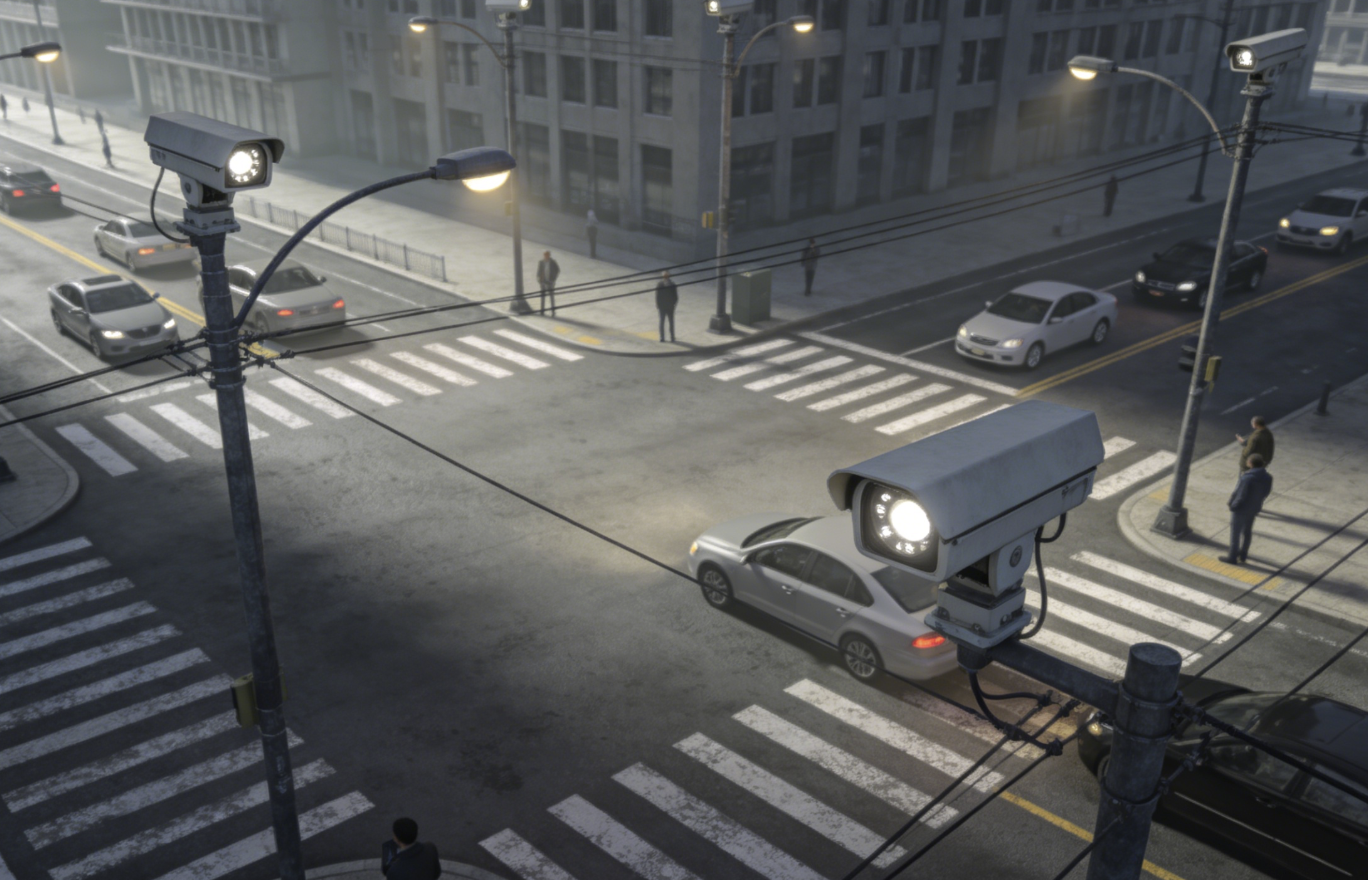
Long-range image stability requires rigid infrastructure. Wind shear and structural vibration severely impact high-zoom video. A minor vibration at the pole translates to violent shaking on the monitor when viewing a target ten kilometers away.
Gyroscopic or electronic image stabilization (EIS) helps mitigate this issue. However, stabilization software cannot fix a poorly mounted camera. Use rigid, purpose-built mounting poles designed specifically for heavy PTZ systems. Consider power and bandwidth realities as well. Dual-stream, high-resolution video with metadata requires robust network infrastructure. Ensure the site can deliver adequate power, whether through PoE++ or dedicated 24VAC/48VDC lines.
Install concrete foundations engineered for the specific wind load of the region.
Utilize tapered steel or aluminum poles designed to minimize harmonic vibration.
Route all cabling internally through the pole to protect against vandalism and weather degradation.
Install industrial-grade surge protectors at both the camera base and the network switch to prevent lightning damage.
Verify network bandwidth capacity; dual-spectrum cameras transmitting uncompressed thermal and optical streams require significant throughput.
Fiber optic cabling is mandatory for long-distance network runs. Standard copper Ethernet cables suffer from signal degradation beyond one hundred meters. Fiber optic links provide immune, high-bandwidth connections back to the central server room. Media converters installed at the base of the pole transition the fiber signal back to standard Ethernet for connection to the camera.
Thermal cameras see through total darkness, but they do not ignore weather. Environmental attenuation reduces thermal contrast. High humidity, heavy rain, snow, and dense fog absorb infrared radiation. This shortens the effective detection range of the camera.
A camera that detects a human at five kilometers in dry conditions might only achieve two kilometers in dense fog. Mitigation strategies require realistic planning. Conduct proper site surveys during poor weather conditions. Design overlapping coverage based on worst-case environmental scenarios, not ideal laboratory conditions. Avoid placing cameras where localized fog or industrial steam frequently accumulates.
The specific wavelength of the thermal sensor dictates its performance in different weather conditions. Long-Wave Infrared (LWIR) sensors, operating in the 8 to 14-micron range, generally perform better in smoke and light fog. Mid-Wave Infrared (MWIR) sensors, operating in the 3 to 5-micron range, offer higher contrast and longer ranges in clear conditions but suffer more attenuation in high humidity.
Security designers must consult local meteorological data when calculating effective ranges. A facility in a dry desert environment will achieve significantly longer detection ranges than a facility located on a humid coastline. The system design must incorporate these environmental realities to ensure reliable performance year-round. Over-engineering the system with slightly longer focal length lenses provides a necessary buffer against severe weather degradation.
Conduct a comprehensive site survey to identify terrain blind spots, dead zones, and necessary mounting heights.
Request a proof-of-concept demonstration in actual, adverse environmental conditions to verify real-world DRI performance.
Validate slew-to-cue functionality by integrating the camera with existing radar or VMS platforms during the testing phase.
Select sensor types based strictly on verified operational range requirements rather than marketing claims.
Ensure mounting infrastructure is engineered to eliminate vibration and withstand local wind load requirements.
A: Maximum detection range depends on the sensor type and lens. Uncooled thermal cameras typically detect vehicles up to 5 kilometers away. Cryogenically cooled thermal cameras can detect large vehicular targets at distances exceeding 30 kilometers under optimal conditions.
A: Active IR cameras require built-in infrared illuminators to project light, which the camera then reads. They are limited by the range of their illuminators. Thermal cameras detect the natural heat emitted by objects, requiring no illumination and functioning perfectly in total darkness.
A: No. Thermal cameras cannot see through glass, walls, or solid objects. Glass reflects infrared radiation, acting like a mirror to a thermal sensor. The camera only detects the surface temperature of the first solid object in its line of sight.
A: Slew-to-cue is an automated integration feature. When a primary sensor, like ground radar or a fence perimeter alarm, detects an intrusion, it sends location coordinates to the PTZ camera. The camera automatically turns (slews) to that exact location (cue) to track the target.
A: Cryogenically cooled thermal sensors rely on internal mechanical coolers. These coolers undergo significant wear and typically require factory rebuilding or replacement every 10,000 to 15,000 hours of continuous operation.
A: Yes. While thermal cameras outperform optical cameras in bad weather, heavy rain, dense fog, and high humidity absorb infrared radiation. This environmental attenuation reduces the thermal contrast, which shortens the camera's effective detection range.
A: Yes. Modern systems can run continuous pre-programmed patrol routes while edge analytics monitor the feed. If the analytics detect a human or vehicle during the patrol, the camera can interrupt its tour to lock onto and track the specific threat.