Drones are becoming a growing threat in both commercial and military sectors. But how do we stop them?
Anti-UAV laser technology has emerged as one of the most effective solutions. In this article, we’ll dive into how these lasers work to disable drones and explore their role in modern security systems.
You’ll learn how laser systems are integrated with detection and tracking devices, providing a precise and cost-effective countermeasure.
Unmanned Aerial Vehicles (UAVs), commonly known as drones, have seen significant growth in both the commercial and military sectors. In the commercial world, drones are used for everything from package deliveries to aerial photography. In the military, UAVs serve a variety of purposes, including surveillance, reconnaissance, and even offensive operations. As these technologies become more advanced and affordable, the number of drones in the sky has skyrocketed.
However, with this rise comes increased security risks. Drones have become a tool for criminals and terrorists, offering a relatively low-cost and discreet means of smuggling goods, conducting surveillance, or even launching attacks. Their ability to fly undetected and access hard-to-reach areas has made them a growing concern for security agencies worldwide. The versatility of drones has posed challenges for governments and organizations in terms of protecting airspace and critical infrastructure from potential threats.
Drones are now being used in various high-risk scenarios, from breaching borders to surveillance over sensitive facilities. These rising threats underscore the need for advanced countermeasures like Anti-UAV systems, including laser-based technologies.
To mitigate the risks posed by drones, various countermeasures have been developed over the years. Traditional methods, such as jamming, net capture, and kinetic interceptors, have had varying degrees of success. Jamming works by disrupting the drone’s communication system, while net capture attempts to physically capture the drone. Kinetic interceptors involve using missiles or projectiles to destroy the drone mid-air. While these methods have their place, they come with certain limitations, including collateral damage, high operational costs, and limited precision.
In recent years, the focus has shifted towards more effective, precision-focused solutions. Anti-drone laser systems are at the forefront of this change. These lasers work by targeting and disabling drones with highly concentrated beams of energy, offering a cost-effective, precise, and scalable solution. Moreover, when paired with advanced systems like Drone Detection Radar and Drone Detection and Tracking Cameras, laser systems can offer real-time targeting and efficient threat neutralization without the risks associated with traditional countermeasures.
Method | Description | Pros | Cons |
Jamming | Disrupts communication between drone and controller | Quick response, no physical damage | Can affect other systems, limited range |
Net Capture | Physically captures drone with a net | Safe for surrounding area, reusable nets | Limited effectiveness for high-speed drones |
Kinetic Interceptors | Uses missiles to destroy drones | High precision, effective at long range | Expensive, high collateral damage potential |
Anti-Drone Lasers | High-energy lasers disable drone's key components | Precise, cost-effective, minimal collateral | Performance affected by environmental factors |
High-energy lasers (HEL) are one of the most advanced countermeasures used to disable drones. These lasers focus intense energy on a drone’s key components, such as its cameras, sensors, and flight control systems, rendering it inoperable. The laser system generates a concentrated beam of light that heats up the targeted components. The high temperature caused by the laser’s energy can melt, burn, or short-circuit critical parts, such as the drone’s motors or battery.
The process begins when the laser beam is directed toward the drone, often using real-time data from radar or tracking cameras to maintain accurate targeting. The laser energy is absorbed by the materials on the drone, leading to rapid thermal expansion, which causes damage or destruction of the components. In some cases, this might cause the drone’s propulsion system to fail, making it fall out of the sky.
The precision of laser systems allows for highly targeted strikes that minimize collateral damage, a significant advantage over more traditional kinetic methods. The ability to disable a drone mid-flight without causing physical destruction to its surroundings is a key benefit of using high-energy lasers in counter-UAV operations.
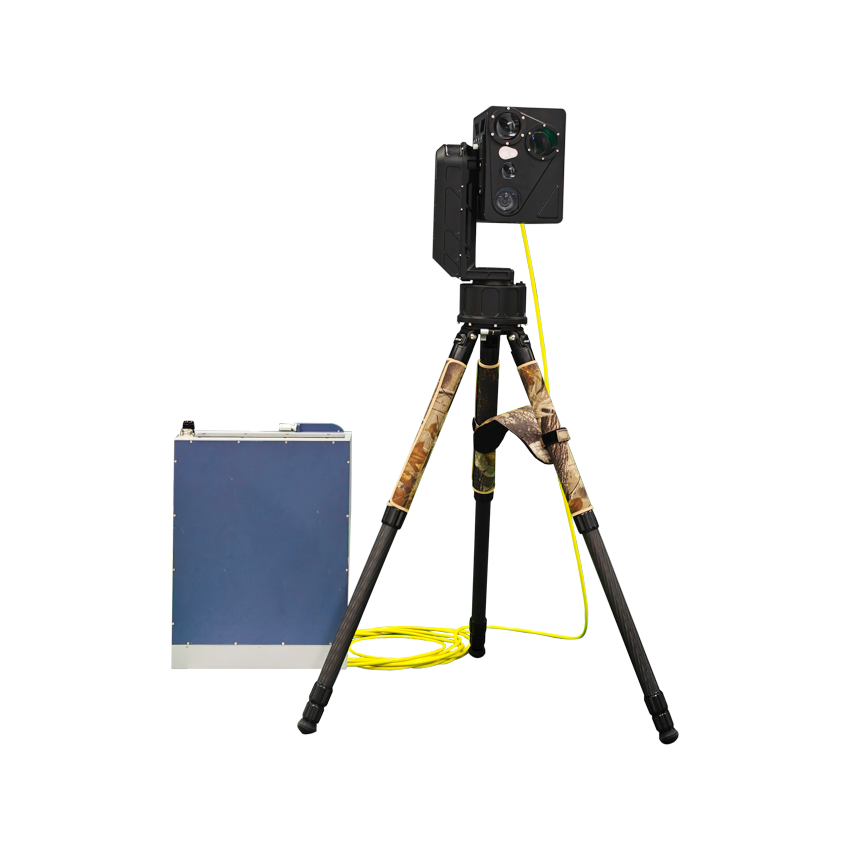
Anti-UAV laser systems are composed of several key components that work together to provide an effective and efficient means of disabling drones. One of the most critical parts is the laser emitter, which generates the high-powered beam. The type of laser used can vary, with solid-state lasers and fiber lasers being the most commonly deployed in counter-drone applications. Solid-state lasers are compact and provide high energy output, while fiber lasers offer excellent beam quality and efficiency over long distances.
Another essential component is the cooling system. Lasers generate significant amounts of heat, so an efficient cooling system is crucial to prevent overheating and maintain operational integrity. Finally, the tracking devices, including radar systems and cameras, are responsible for identifying and maintaining the position of the drone. These devices allow the laser system to target the drone with precision, ensuring that the laser hits the intended components.
Together, these elements form an integrated anti-drone system that can effectively neutralize threats with minimal risk of collateral damage. The combination of high power, precision, and real-time targeting makes laser-based systems a superior choice in modern counter-drone defense strategies.
Component | Description | Function |
Laser Emitter | Generates high-powered laser beams | Disables drone's critical components |
Cooling System | Maintains operational temperature of the laser | Prevents overheating and ensures optimal function |
Tracking Devices | Includes radar and cameras | Tracks drone position and ensures accurate targeting |
Power Supply | Provides energy to the laser system | Ensures continuous operation of the laser |
One of the key advantages of laser-based countermeasures is their exceptional precision in targeting and neutralizing threats. Lasers can be directed with extreme accuracy to focus on specific parts of a drone, such as its flight control systems, sensors, or cameras. This highly focused energy disrupts the drone's functionality while minimizing any impact on the surrounding environment.
In comparison to traditional kinetic methods, such as missiles or projectiles, lasers offer the advantage of rapid response times and precision targeting. A laser system can disable a drone within seconds, whereas kinetic methods may take longer to launch and have a higher chance of causing unintended damage. This precision makes lasers particularly useful in populated areas or sensitive locations where minimizing collateral damage is a critical concern.
Additionally, laser systems can operate in real-time, continuously tracking and adjusting their aim to ensure the drone is neutralized efficiently. The ability to make quick adjustments based on the drone’s movement or position adds another layer of reliability to the laser’s efficiency in neutralizing threats.
While the initial cost of setting up an anti-drone laser system can be high, the long-term operational costs are significantly lower compared to traditional countermeasures like missile interception or jamming systems. Laser systems do not rely on expendable ammunition, such as missiles or projectiles, which can be expensive and need to be replenished after each use. Instead, lasers use electrical power to generate the energy needed to disable drones, making the cost per engagement substantially lower over time.
This lack of physical ammunition not only reduces operational costs but also eliminates the need for resupply, making laser systems more sustainable for prolonged use. In comparison, missile systems require frequent replenishment, and jamming systems may require maintenance and operational adjustments to keep up with evolving drone technologies. Thus, laser-based countermeasures provide a more cost-effective solution for ongoing drone defense operations, offering significant savings in terms of maintenance and replenishment.
In summary, the precision and efficiency of laser systems, combined with their long-term cost-effectiveness, make them a valuable tool in countering UAV threats, especially when compared to traditional methods.
Anti-UAV lasers work in close integration with radar systems to effectively detect, track, and neutralize drone threats in real time. Drone Detection Radar plays a critical role in the first step of the process by identifying potential threats in the airspace. Once a drone is detected, the radar system provides detailed information about its location, speed, and trajectory. This data is then passed on to the laser system, enabling it to track the drone accurately.
The combination of radar and laser systems allows for quick, real-time targeting. The radar continuously scans the area, while the laser system is ready to engage and neutralize the drone based on the tracking data. This integration provides an immediate response capability, as lasers can be directed to the target almost instantaneously once the drone is detected. The ability to track and neutralize threats in seconds significantly reduces the window of vulnerability, especially in high-risk scenarios where drones may be used for malicious purposes.
By combining radar’s detection capabilities with the precision of anti-UAV lasers, this integrated system ensures that drones can be neutralized with minimal delay, enhancing security measures and making the process more efficient than traditional counter-drone methods.
Cameras, both optical and infrared, play a vital role in enhancing the targeting accuracy of anti-UAV laser systems. Optical cameras provide high-resolution imagery that allows for clear visual identification of drones. Infrared cameras, on the other hand, detect heat signatures, which is particularly useful in low-light or challenging weather conditions, such as fog or rain. These cameras work in tandem with the radar and laser systems to provide a more comprehensive tracking solution.
The camera systems feed real-time visual data to the laser system, allowing it to make adjustments based on the drone’s position, size, and movement. This integration ensures that the laser can precisely target and disable the drone’s critical components, regardless of the surrounding environmental conditions. The use of cameras helps the laser systems to operate with greater flexibility, adapting to varying lighting, weather, and operational scenarios.
Together, radar and camera systems provide a robust solution for tracking, identifying, and neutralizing drone threats, ensuring a high level of accuracy and efficiency in counter-drone operations.
One of the primary challenges for anti-drone laser systems is their performance in various environmental conditions. Weather factors such as fog, rain, dust, and even high humidity can significantly degrade the effectiveness of lasers. These elements scatter and absorb laser beams, reducing their power and precision, which can make it more difficult to target drones accurately. For example, fog and rain cause the laser energy to dissipate before reaching the drone, weakening its ability to disable the UAV.
Additionally, high winds or dust storms can further complicate targeting and tracking, as they affect both the laser and the sensors used for aiming. In such conditions, maintaining a laser beam’s intensity and focus becomes increasingly difficult, reducing the system’s overall effectiveness.
Range limitations are another challenge. The power of the laser typically diminishes over longer distances, meaning that it may struggle to engage drones at extended ranges. While laser systems can effectively disable nearby drones, their ability to target far-off UAVs with the same precision is often restricted by the atmospheric conditions they encounter.
In addition to environmental limitations, anti-drone lasers face several technical challenges in terms of system development. Compact, mobile, and cost-effective laser systems are still under development. The current laser systems often require large, heavy equipment, limiting their use in more flexible or mobile scenarios, such as on vehicles or small-scale installations.
Another challenge is cooling. Lasers generate significant amounts of heat during operation, and ensuring that the system remains within safe operating temperatures is crucial. Effective cooling systems are necessary to maintain the laser’s performance, but they add to the complexity and cost of the technology.
Moreover, integrating laser systems with radar, cameras, and other tracking devices can be complex. Ensuring that all components work seamlessly together in real-time requires advanced system integration and continuous innovation. These technical hurdles need to be overcome to improve the effectiveness, portability, and affordability
The future of anti-drone laser technology is bright, with ongoing advancements focused on increasing laser power, miniaturization, and energy efficiency. Researchers are working on developing more powerful lasers that can engage drones at greater distances while maintaining precision. This is achieved by improving the efficiency of the laser’s energy conversion and focusing mechanisms, allowing for higher energy outputs without the need for significantly larger or more complex systems.
Miniaturization is another key area of development. Current laser systems can be large and cumbersome, limiting their use in mobile or field operations. However, ongoing research into more compact laser components is making it possible to integrate these systems into smaller platforms, such as vehicles, drones, and even handheld devices.
Energy efficiency is also being prioritized, as it allows for longer operational periods and reduces the need for frequent recharging or power supply. By refining the power systems and cooling technologies, researchers are looking to make laser-based counter-drone systems more sustainable and cost-effective in the long term. In addition, advancements in laser targeting systems are helping improve accuracy, reducing operational costs by minimizing the need for recalibration and enhancing the overall system performance.
As laser systems continue to evolve, their applications will expand across a wide range of sectors, including military, commercial, and law enforcement. In the military, laser-based counter-UAV technologies will be crucial for protecting military installations, convoys, and airspaces from hostile drones. The ability to target and neutralize drones quickly and accurately will be invaluable in combat and surveillance scenarios.
In commercial sectors, lasers could be used to protect critical infrastructure, such as airports, power plants, and stadiums, from unauthorized drone activity. The rise of drone delivery services and recreational drone use also means that security measures like anti-drone lasers will become increasingly necessary to ensure public safety.
Law enforcement agencies are also looking into lasers as a solution for preventing drone-related crimes, such as smuggling or surveillance in restricted areas. As drones become more prevalent, lasers will increasingly be integrated into autonomous and rapid-response systems, where they can be deployed in real-time to neutralize threats quickly and efficiently.
The future of anti-drone laser technology points toward highly versatile, efficient, and cost-effective systems that can be seamlessly integrated into a range of security infrastructures, providing critical protection in an increasingly drone-populated world. of anti-drone laser systems.
The future of anti-drone laser technology is bright, with ongoing advancements focused on increasing laser power, miniaturization, and energy efficiency. Researchers are working on developing more powerful lasers that can engage drones at greater distances while maintaining precision. This is achieved by improving the efficiency of the laser’s energy conversion and focusing mechanisms, allowing for higher energy outputs without the need for significantly larger or more complex systems.
Miniaturization is another key area of development. Current laser systems can be large and cumbersome, limiting their use in mobile or field operations. However, ongoing research into more compact laser components is making it possible to integrate these systems into smaller platforms, such as vehicles, drones, and even handheld devices.
Energy efficiency is also being prioritized, as it allows for longer operational periods and reduces the need for frequent recharging or power supply. By refining the power systems and cooling technologies, researchers are looking to make laser-based counter-drone systems more sustainable and cost-effective in the long term. In addition, advancements in laser targeting systems are helping improve accuracy, reducing operational costs by minimizing the need for recalibration and enhancing the overall system performance.
As laser systems continue to evolve, their applications will expand across a wide range of sectors, including military, commercial, and law enforcement. In the military, laser-based counter-UAV technologies will be crucial for protecting military installations, convoys, and airspaces from hostile drones. The ability to target and neutralize drones quickly and accurately will be invaluable in combat and surveillance scenarios.
In commercial sectors, lasers could be used to protect critical infrastructure, such as airports, power plants, and stadiums, from unauthorized drone activity. The rise of drone delivery services and recreational drone use also means that security measures like anti-drone lasers will become increasingly necessary to ensure public safety.
Law enforcement agencies are also looking into lasers as a solution for preventing drone-related crimes, such as smuggling or surveillance in restricted areas. As drones become more prevalent, lasers will increasingly be integrated into autonomous and rapid-response systems, where they can be deployed in real-time to neutralize threats quickly and efficiently.
The future of anti-drone laser technology points toward highly versatile, efficient, and cost-effective systems that can be seamlessly integrated into a range of security infrastructures, providing critical protection in an increasingly drone-populated world.
Anti-drone lasers are a powerful solution for neutralizing UAV threats. These lasers work by targeting and disabling key drone components with high energy. The integration of laser systems with radar and cameras enhances their precision and efficiency. Companies like Ryan Optics Technology Co., Ltd. provide cutting-edge laser solutions, offering highly effective and cost-efficient countermeasures for security purposes. Their products play a vital role in safeguarding airspace and critical infrastructure.
A: Anti-UAV lasers use high-energy beams to target and disable drones. These lasers damage the drone’s critical components like cameras or sensors, rendering it inoperable.
A: Anti-UAV lasers offer precision, efficiency, and minimal collateral damage compared to traditional counter-drone methods like missiles. They can quickly neutralize threats without physical projectiles.
A: Laser Anti-Drone Systems work with Drone Detection Radar to detect and track drones. This integration allows for real-time targeting, enabling quick neutralization of UAVs.
A: Anti-UAV lasers are more cost-effective, as they don’t require ammunition, and they provide precise, rapid responses compared to missile interception or kinetic systems.
A: Key components of a laser anti-drone system include laser emitters, cooling systems, and tracking devices like Drone Detection and Tracking Cameras for precise targeting.