Author: Site Editor Publish Time: 2026-07-17 Origin: Site
The rapid proliferation of commercial and modified Unmanned Aerial Systems (UAS) has rendered traditional two-dimensional perimeter security obsolete, exposing critical infrastructure, corporate campuses, and public venues to asymmetric aerial threats. Security directors face a complex challenge: detecting low-RCS (Radar Cross Section), fast-moving targets in cluttered airspace while navigating strict legal frameworks that severely limit mitigation options. Moving from threat awareness to active defense requires a technical understanding of how these defense architectures function. This guide breaks down the mechanics of detection and mitigation, legal constraints, and the evaluation criteria necessary to shortlist a viable, compliant solution.
Multi-Sensor Fusion is Mandatory: No single sensor modality (RF, Radar, EO/IR) provides 100% coverage; effective counter-drone systems rely on layered, fused data to eliminate false positives.
Detection vs. Mitigation: While detection is legally permissible for most organizations, active mitigation (jamming, spoofing, kinetic defeat) is heavily restricted and often limited to federal or military authorities.
Environment Dictates Architecture: Urban environments with high RF noise require vastly different counter-drone configurations than open-terrain military installations or remote critical infrastructure.
Integration is the Bottleneck: A system's viability depends heavily on its ability to integrate with existing Physical Security Information Management (PSIM) and Video Management Systems (VMS) via open APIs.
Defining what constitutes a complete C-UAS (Counter-Unmanned Aerial Systems) kill chain is the first step in understanding aerial defense. A robust counter drone architecture operates in three distinct phases, moving from initial awareness to final resolution. When you deploy these systems in the field, you quickly realize that hardware alone does not solve the problem. The integration of these phases determines whether your security team receives actionable intelligence or a flood of false alarms.
Phase 1: Detection, Tracking, and Identification (DTI). This involves the continuous monitoring of airspace to locate anomalies, track their flight paths, and classify the payload or drone model. Without accurate DTI, subsequent actions are impossible. Field operators rely on this phase to distinguish between a hobbyist drone and a coordinated threat.
Phase 2: Mitigation and Defeat. This is the application of electronic, cyber, or kinetic countermeasures to neutralize the threat, always subject to strict legal authority. In practical terms, this means having the capability to sever the command link or physically intercept the drone before it breaches the inner perimeter.
Phase 3: Command and Control (C2). The C2 platform serves as the central software interface that aggregates sensor data, applies machine learning algorithms to filter noise, and automates standard operating procedures. A well-configured C2 system reduces operator cognitive load during high-stress incidents.
Implementing this architecture requires careful site planning. You have to account for blind spots caused by buildings, trees, and terrain variations. A single sensor placed on a rooftop might look good on a coverage map, but real-world testing often reveals significant gaps that require supplementary sensors to fill.
Effective detection relies on overlapping technologies, as no single sensor can operate flawlessly in all conditions. Relying on a single modality guarantees failure when environmental or tactical conditions change.
| Sensor Type | Primary Mechanism | Key Advantages | Main Limitations |
|---|---|---|---|
| Radio Frequency (RF) | Scans spectrum for drone-controller links | Early warning, locates pilot | Fails against autonomous drones |
| Micro-Doppler Radar | Detects physical movement and rotors | Tracks autonomous threats, weather-proof | False positives from birds |
| EO/IR Cameras | Visual and thermal imaging verification | Visual ID, payload assessment | Limited by line-of-sight and fog |
| Acoustic Sensors | Matches audio signatures to databases | Passive, cost-effective | Short range, fails in noisy areas |
RF analyzers scan the spectrum for communication links between the drone and its controller. They provide excellent early warning capabilities and can often locate the pilot on the ground. However, they remain ineffective against autonomous drones that navigate via pre-programmed waypoints without emitting RF signals. In urban deployments, baseline RF noise from Wi-Fi routers and communication towers can severely degrade detection ranges, requiring careful calibration during installation.
These systems emit radio waves to detect the physical movement and rotor signatures of drones. Micro-Doppler radar tracks autonomous drones effectively and operates reliably in adverse weather conditions. The primary drawback is susceptibility to false positives from birds in high-clutter environments. Modern radar units mitigate this by analyzing the specific micro-Doppler signature of spinning rotors versus flapping wings, but tuning this threshold requires on-site adjustments.
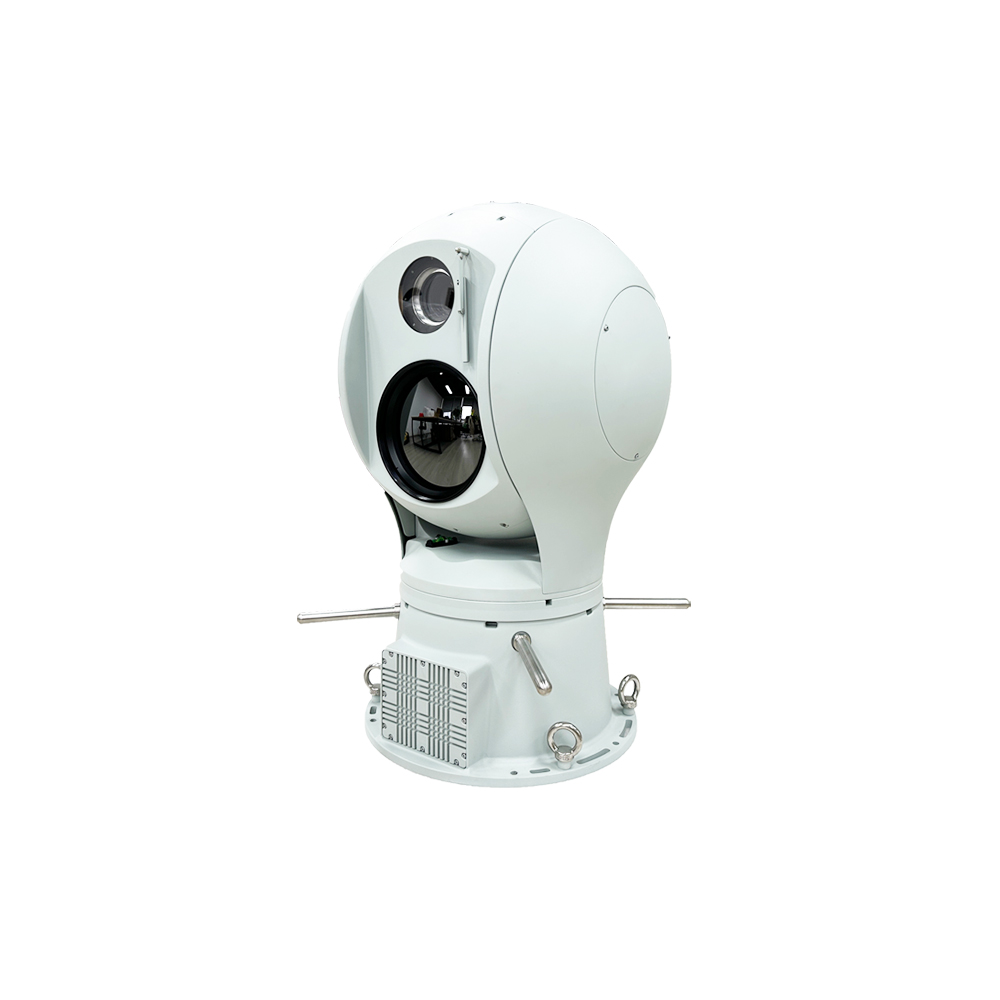
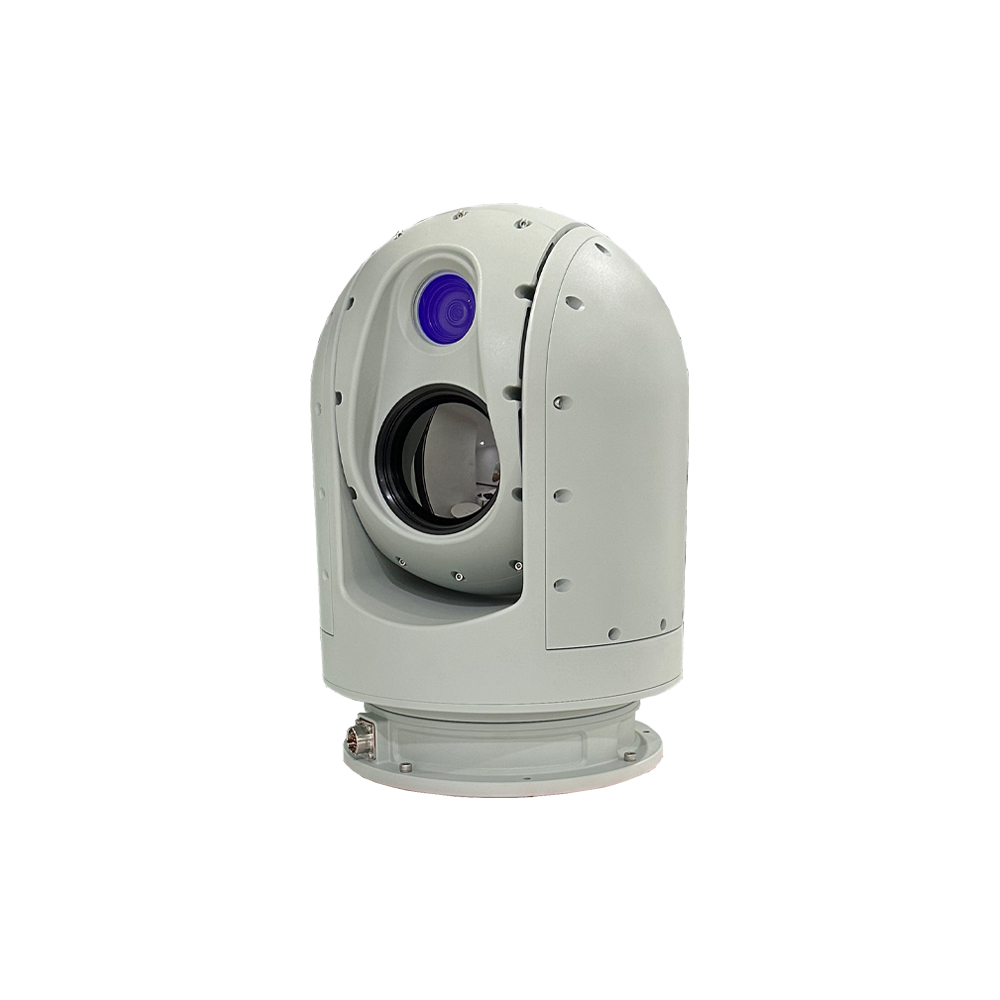
EO/IR cameras use high-resolution visual and thermal imaging to verify targets, often enhanced by computer vision for automated object classification. They are essential for visual identification and payload assessment. Their performance is limited by line-of-sight obstructions, fog, and heavy rain. When integrated properly, a radar detection will automatically slew the EO/IR camera to the target's coordinates, providing operators with immediate visual confirmation.
Acoustic sensors compare audio signatures against a database of known drone motor sounds. While passive and cost-effective, they have a highly limited range and struggle significantly in noisy urban environments. We typically deploy acoustic sensors as gap-fillers in quiet, remote locations where other sensor types are impractical or cost-prohibitive.
When legal authority permits, mitigation strategies fall into two primary categories: soft kill and hard kill. Selecting the right approach depends entirely on the operational environment and the acceptable level of collateral damage.
Jamming involves flooding the operational frequency, such as 2.4GHz, 5.8GHz, or GNSS bands, with noise. This severs the controller link, forcing the drone into a pre-programmed return-to-home or auto-land protocol. While highly effective against commercial off-the-shelf drones, jamming can disrupt legitimate local communications. Operators must carefully manage the power output and directional antennas to contain the jamming signal within the designated threat zone.
Spoofing tricks the drone into accepting commands from the defense system rather than the legitimate operator. This allows security personnel to safely reroute or land the threat away from vulnerable assets. Cyber takeover is surgical and avoids the broadband interference associated with jamming, making it preferable in complex RF environments. However, it requires constant software updates to maintain compatibility with new drone firmware releases.
Kinetic methods focus on the physical destruction or capture of the drone. Tactics include deploying net-guns, interceptor drones, or traditional ballistics to remove the threat from the sky. Kinetic options carry a high risk of collateral damage from falling debris. We reserve these methods for scenarios where a soft kill is impossible or when the drone poses an immediate, catastrophic threat to human life or critical infrastructure.
High-Energy Lasers (HEL) or High-Power Microwave (HPM) systems are used primarily in military theaters. These weapons fry the internal electronics of the drone or physically destroy the airframe mid-flight. While highly effective against drone swarms, their massive power requirements and strict safety protocols make them unsuitable for civilian or commercial applications.
Deploying aerial defense technology requires strict adherence to complex legal frameworks. Ignoring these regulations exposes organizations to severe civil and criminal liabilities.
The FCC strictly prohibits jamming and spoofing for state, local, and private entities. These actions carry a severe risk of disrupting legitimate communications, including emergency services and commercial aviation networks. Even testing jamming equipment on private property violates federal law unless explicitly authorized by the appropriate federal agencies.
The FAA classifies drones as aircraft. Consequently, intercepting, shooting down, or interfering with a drone in national airspace carries severe legal ramifications under Title 18 of the U.S. Code. Security teams must understand that their authority generally ends at detection and reporting. Physical intervention is legally perilous and usually requires direct coordination with federal law enforcement.
Organizations must ensure sensor hardware and software components are free of banned foreign technologies. Adhering to NDAA Section 889 compliance protects sensitive operational data from espionage and cyber vulnerabilities. When auditing a vendor, demand a complete bill of materials to verify the origin of all internal components, especially the communication modules and processing chips.
Private enterprises must partner with authorized federal agencies, such as DHS, FBI, or DoD, to implement active mitigation. This restricts commercial buyers primarily to detection-only architectures. Establishing standard operating procedures that dictate exactly who to call and what information to provide when a threat is detected is just as important as the hardware itself.
Choosing the correct system requires matching technical capabilities to specific site realities. A system that works perfectly in a desert testing facility will likely fail in a dense metropolitan area.
Organizations must define the specific threat they face. Protecting against corporate espionage via cameras requires different sensor ranges and identification capabilities than defending against physical payload delivery. If your primary concern is surveillance, you need high-resolution EO/IR cameras to identify the payload. If you are defending against explosive payloads, early warning radar becomes the priority.
Security teams must assess line-of-sight obstructions, baseline RF noise, and local wildlife activity. High bird activity or dense urban infrastructure will dictate the necessary ratio of Radar to RF sensors. Conduct a thorough site survey to map out RF dead zones and physical blind spots before finalizing the sensor layout.
Evaluate the vendor's C2 software for open architecture. The system must ingest data from third-party radars and push alerts seamlessly to existing security dashboards. Closed ecosystems force you to rely entirely on one vendor for future upgrades. Demand open APIs and test the integration with your existing VMS during the evaluation phase.
Verify the manufacturing origin of sensors and firmware. Secure provenance prevents espionage, cyber vulnerabilities, and supply chain disruptions during critical operations. Request documentation proving that the software development lifecycle includes regular penetration testing and vulnerability patching.
Deploying these systems introduces operational risks that require proactive management. Failing to address these risks leads to system abandonment and wasted resources.
Security teams often begin ignoring alerts due to high rates of misidentified birds or localized RF interference. Mitigate this by mandating multi-sensor fusion. Require a radar detection, followed by a PTZ camera slew-to-cue, and visual verification before triggering a final alert. Adjusting the confidence thresholds in the C2 software helps filter out transient noise.
Active mitigation systems risk inadvertently taking down local Wi-Fi, medical equipment, or legitimate commercial drone operations. Establish strict geofencing of mitigation zones and utilize precision cyber-takeover rather than broadband jamming where legally permitted. Always coordinate with local spectrum managers before activating any RF-emitting countermeasures.
Sensors, particularly active radar and RF scanners, can interfere with existing enterprise communications, local LTE bands, or nearby aviation channels. Conduct comprehensive pre-deployment RF spectrum surveys and establish automated frequency deconfliction protocols. Ensure your radar operates on frequencies that do not overlap with critical site infrastructure.
An effective defense system is not a single piece of hardware, but a fused network of sensors tailored to the specific acoustic, visual, and RF realities of the deployment site. Commercial and local government entities must prioritize robust DTI systems with seamless VMS integration, while military and federal buyers can evaluate full kill-chain solutions including mitigation.
Conduct a comprehensive site survey and RF spectrum analysis to establish baseline environmental noise.
Consult with legal counsel regarding local airspace regulations before purchasing any active mitigation technology.
Request a live, on-site vendor demonstration rather than relying on controlled-environment spec sheets.
Ensure all integrated hardware meets strict NDAA compliance standards to secure operational data.
An effective defense system is not a single piece of hardware, but a fused network of sensors tailored to the specific acoustic, visual, and RF realities of the deployment site. Commercial and local government entities must prioritize robust DTI systems with seamless VMS integration, while military and federal buyers can evaluate full kill-chain solutions including mitigation.
For organizations aiming to deploy the highest level of optical target tracking within their multi-sensor architecture, partnering with a trusted industry leader is vital.Ryanspecializes in the engineering, custom design, and production of world-class electro-optical and thermal imaging payloads. Their advanced sensor systems integrate flawlessly into modern C2 networks and radar frameworks, delivering the rapid, high-definition visual verification needed to complete the C-UAS kill chain in any operational environment.
To secure your airspace effectively:
Conduct a comprehensive site survey and RF spectrum analysis to establish baseline environmental noise.
Consult with legal counsel regarding local airspace regulations before purchasing any active mitigation technology.
Request a live, on-site vendor demonstration rather than relying on controlled-environment spec sheets.
Ensure all integrated hardware meets strict NDAA compliance standards to secure operational data.
A: Effective range varies heavily by sensor type and environment. RF sensors can detect signals up to several kilometers away in open terrain, while acoustic sensors may only reach a few hundred meters. Urban environments significantly reduce these ranges due to physical obstructions and signal interference.
A: No. In most jurisdictions, including the United States, private companies are strictly prohibited from shooting down, jamming, or spoofing drones. Drones are classified as aircraft, and interfering with them violates federal aviation and communications laws.
A: Detection involves identifying, tracking, and classifying a drone using sensors like radar, RF, and cameras. Mitigation involves actively neutralizing the threat through electronic jamming, cyber takeover, or physical destruction.
A: Modern systems use micro-Doppler radar combined with advanced algorithms. These algorithms analyze the unique radar cross-section and the specific movement patterns of drone rotors, which differ significantly from the flapping motion of bird wings.
A: Yes. Heavy rain, fog, and snow severely degrade the performance of Electro-Optical and Infrared (EO/IR) cameras. However, radar and RF sensors generally remain effective regardless of adverse weather conditions.
A: C-UAS stands for Counter-Unmanned Aerial Systems. It refers to the comprehensive set of technologies, protocols, and hardware used to detect, track, identify, and mitigate unauthorized drones.