Author: Site Editor Publish Time: 2026-07-17 Origin: Site
Evaluating thermal imaging systems often begins with a simple question that has a highly complex answer: how far can it see? Manufacturer marketing materials frequently boast impressive figures, claiming their systems detect vehicles at 60 kilometers and humans at 30 kilometers under ideal conditions. Operational reality in the field rarely aligns with these laboratory-grade specifications. Relying solely on maximum range claims leads to critical procurement errors. Security teams end up with systems that detect a vague heat anomaly but fail to provide actionable intelligence or measurable temperature data. Misunderstanding the technical definition of range creates a gap between expectation and performance. A few pixels of heat on a monitor might technically qualify as a detection, but it does not help an operator determine if the anomaly is a trespassing human or a heated exhaust vent. To design a functional security perimeter, you need an engineering framework to accurately calculate thermal camera detection distance. This framework evaluates verifiable success criteria based on optics, sensor capabilities, and environmental realities.
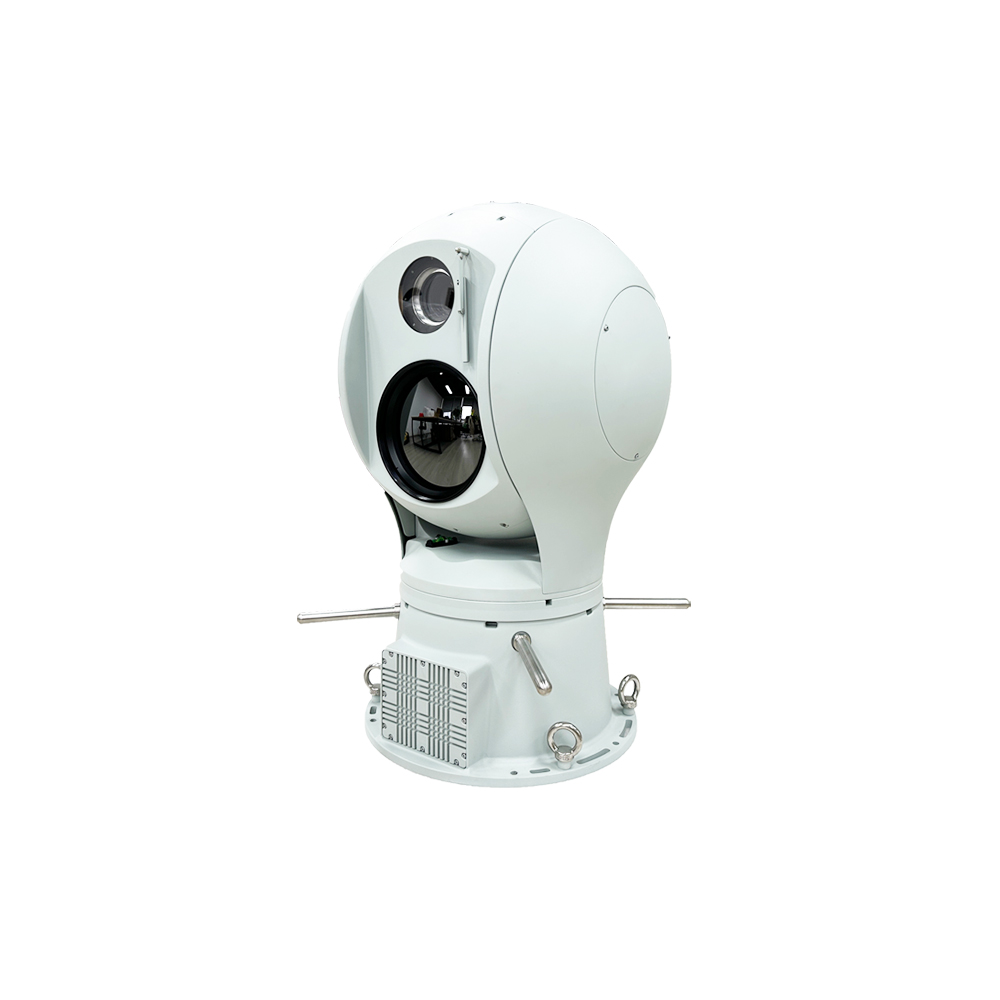
Range is a Spectrum, Not a Single Metric: True operational range must be evaluated using Johnson's Criteria (Detection, Recognition, Identification), where identifying a target requires significantly more resolving power than merely detecting it.
Imaging vs. Thermography (Measurement): There is a critical difference between merely detecting a thermal signature and accurately measuring its temperature at a distance; measurement requires significantly more pixels on target.
Optics and Sensor Synergy: Maximum thermal camera detection distance is dictated by the combination of focal length, sensor resolution, and pixel pitch, which collectively determine the "pixels on target."
Environmental Degradation is Inevitable: Ideal-condition ranges drop significantly due to atmospheric attenuation (humidity, fog, rain) and low thermal contrast; procurement must account for worst-case scenarios.
Cooled vs. Uncooled Trade-offs: Achieving ultra-long-range identification (beyond 10km) typically requires transitioning from uncooled microbolometers to cooled thermal sensors, exponentially increasing cost and maintenance requirements.
Asking how far a camera can see fundamentally misses the point of optical engineering. A basic thermal core can technically register the sun, which sits millions of miles away, simply because the thermal energy is massive. The correct approach asks what specific level of detail you need at a defined distance to trigger a standard operating procedure. The industry relies on Johnson's Criteria, a standard developed by the military to quantify optical performance. This standard breaks down thermal camera detection distance into three distinct categories: Detection, Recognition, and Identification (DRI). You must map your operational requirements directly to these three tiers.
Detection serves as the absolute baseline metric. It means distinguishing a heat anomaly from the background environment. According to Johnson's Criteria, detection requires at least 1.5 pixels to land across the critical dimension of the target. At this range, an operator knows something is out there, but they lack the visual data to classify it. It might be a vehicle, a large animal, or a person walking along a fence line. Detection works well for early warning systems tied to radar slew-to-cue setups, but it rarely provides enough information to dispatch a response team without further verification. Relying on detection range alone for site security guarantees a high rate of false alarms and wasted guard deployments.
Recognition range dictates when an operator can classify the object type. You can distinguish a human from an animal, or a pickup truck from a passenger sedan. This level of detail typically requires at least 6 pixels across the target. Recognition is the standard most security applications require to initiate a response. If the camera recognizes a human walking along a restricted pipeline right-of-way, security personnel can act with confidence. In maritime environments, recognition means telling the difference between a small fishing skiff and a rigid inflatable boat (RIB). Achieving recognition at long distances requires significantly larger germanium lenses than simple detection.
Identification represents the highest threshold of optical clarity. It requires 12 or more pixels on the target. At this range, you can determine specific characteristics and intent. You can identify if a human is carrying a rifle versus a shovel, recognize a specific vehicle profile, or determine the exact nature of a threat. Identification range is exponentially shorter than detection range. A camera that detects a human at 3,000 meters might only identify that same human at 500 meters. When designing a system for critical infrastructure, you must base your lens selection on the identification range required at your most vulnerable perimeter breach points.
There is a massive physical distinction between thermal imaging and thermography. You cannot accurately measure temperature at the same distance you can detect a target. Radiometric accuracy requires a minimum of a 3x3 or 9x9 pixel spot size on the target area to compensate for optical dispersion and sensor noise. The temperature measurement range is therefore much shorter than the optical detection range. If you need to measure the heat of a distant transformer bushing or monitor a flare stack, you need heavy magnification to ensure enough pixels cover the specific component you are measuring. A single pixel registering heat will average the temperature of the target with the cold sky behind it, giving you a falsely low reading.
| Johnson's Criteria Level | Pixels Required on Target | Operational Outcome | Field Example |
|---|---|---|---|
| Detection | 1.5 to 2 pixels | Awareness of an anomaly | Spotting a warm spot on a dark hillside. |
| Recognition | 6 to 8 pixels | Classification of object type | Confirming the warm spot is a human, not a deer. |
| Identification | 12 to 15+ pixels | Determination of specific details | Seeing the human is holding bolt cutters. |
| Radiometric Measurement | 9x9 pixel grid minimum | Accurate temperature reading | Measuring the exact heat of a transformer fin. |
To validate manufacturer claims, buyers must evaluate the physical components of the camera system. Software analytics and digital zoom can enhance an image for the operator's screen, but they cannot create raw data that the lens and sensor failed to capture. The true thermal camera detection distance relies entirely on the physical synergy between the optics and the focal plane array. You must look past the marketing brochures and run the math on the hardware specifications.
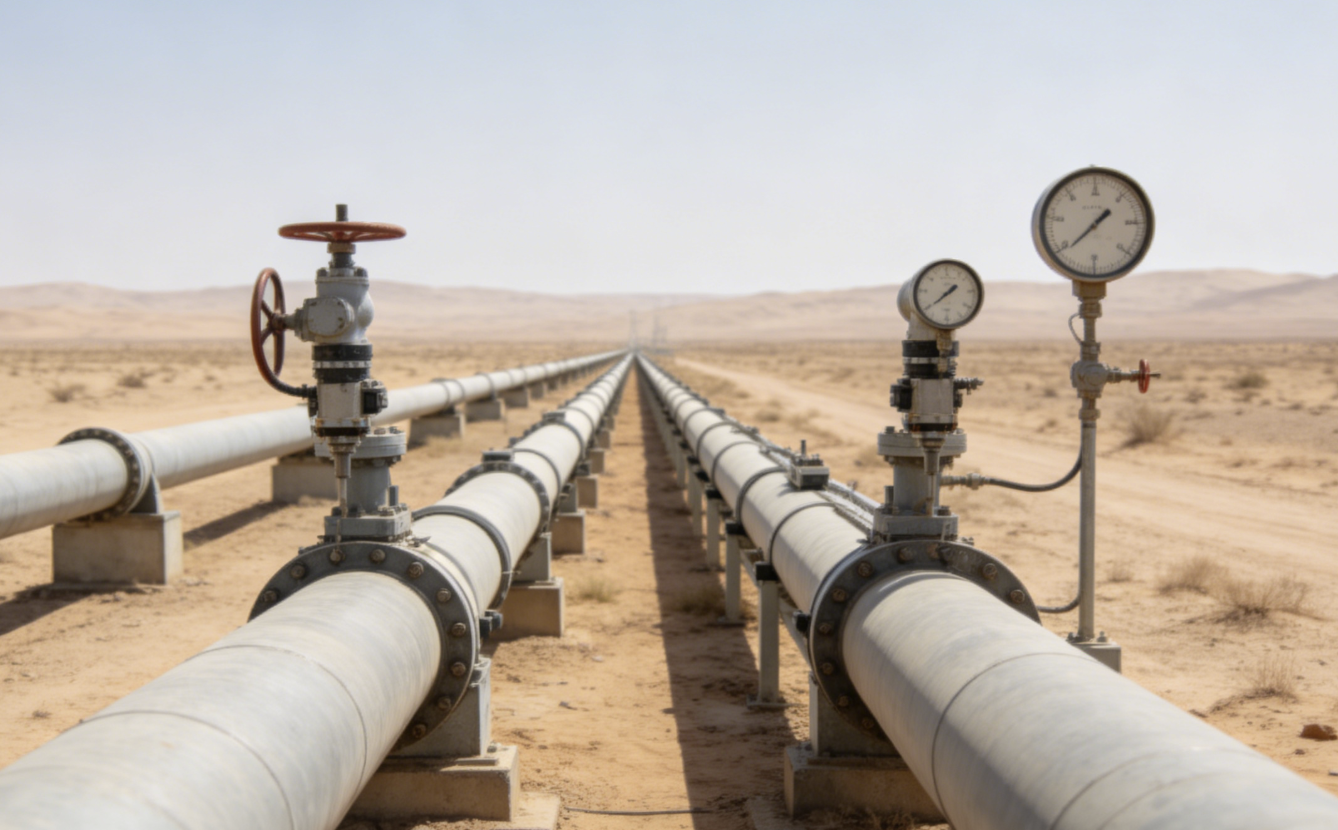
Focal length acts as the optical magnification of the thermal system. A longer focal length, such as a 150mm or 300mm lens, increases detection distance by making the target appear larger on the sensor. However, this fundamentally narrows the Field of View (FOV). This creates a direct inverse relationship between magnification and situational awareness. A narrow FOV is excellent for looking down a long, straight fence line or monitoring a specific border crossing, but it creates massive blind spots in open perimeter security. Operators often use heavy-duty pan-tilt mechanisms or continuous zoom lenses to mitigate this, allowing them to scan wide areas and zoom in when they detect an anomaly. A fixed 150mm lens might give you a 4-degree horizontal field of view, which is like looking through a straw.
Sensor resolution dictates how many pixels make up the image array, commonly 640x512 or 1024x768 in modern systems. Pixel pitch refers to the physical size of each individual pixel on the sensor, measured in microns (µm). A smaller pixel pitch, such as 12µm compared to an older 17µm standard, allows more pixels to fit onto the same physical sensor area. When combined with a high-resolution sensor, a smaller pixel pitch allows more pixels to land on a distant target. This directly extends recognition and identification ranges without requiring a massive, heavy lens. Upgrading from a 17µm sensor to a 12µm sensor while keeping the same lens effectively increases your optical reach by roughly 30 percent.
Noise Equivalent Temperature Difference (NETD) measures the thermal sensitivity of the sensor. It is typically expressed in millikelvins (mK). Lower NETD values, such as sub-30mK, indicate a more sensitive camera. High sensitivity allows the camera to distinguish targets at longer distances when thermal contrast is poor, such as during heavy rain, thick fog, or when the target temperature closely matches the background environment. A camera with poor NETD will produce a noisy, grainy image in low-contrast conditions, drastically reducing effective range. In high-humidity maritime environments, a low NETD rating is non-negotiable for maintaining operational range.
You can mathematically verify a manufacturer’s range claims using the Instantaneous Field of View (IFOV) calculation. IFOV estimates the spatial resolution at a given distance. By calculating the IFOV, you determine exactly how much physical space a single pixel covers at a specific distance. If a single pixel covers two meters at a distance of five kilometers, you know mathematically that you cannot recognize a human at that range, regardless of what the marketing brochure implies.
Identify the pixel pitch of the sensor in millimeters (e.g., 12µm is 0.012mm).
Identify the focal length of the lens in millimeters (e.g., 150mm).
Divide the pixel pitch by the focal length to get the IFOV in radians (0.012 / 150 = 0.00008 rad).
Multiply the IFOV by the target distance in meters to find the pixel footprint (0.00008 * 5000m = 0.4 meters per pixel).
Compare the pixel footprint to the target size. A human is roughly 0.5 meters wide. At 0.4 meters per pixel, you get just over 1 pixel on target. This is a detection, not a recognition.
Laboratory specifications provide a baseline, but field implementation realities dictate actual performance. The environment and the target itself play massive roles in determining how far a system can effectively operate. You cannot deploy a camera based on dry-weather specifications in a coastal environment and expect the same results.
A system's thermal camera detection distance is vastly different for a main battle tank versus a single human. Larger targets cover more pixels. Furthermore, the temperature delta between the target and the background impacts visibility. A hot vehicle engine against a cold winter landscape stands out brilliantly, allowing for extreme detection ranges. A human wearing heavily insulated clothing moving through a dense, sun-baked jungle offers very little thermal contrast, significantly reducing the distance at which they can be detected. When calculating range, you must define the exact dimensions and expected temperature of your primary threat.
Ideal conditions rarely exist in the field. Humidity, rain, snow, and dense fog severely degrade thermal imaging. Water molecules and atmospheric gasses physically absorb and scatter infrared radiation. In environments with high absolute humidity or heavy precipitation, the effective range of a thermal camera can drop by more than 50 percent compared to dry, clear conditions. When designing a perimeter, you must calculate the range based on the worst-case weather scenarios for that specific geographic location. A camera that sees 5 kilometers in the Arizona desert might only see 2 kilometers on the Louisiana coast during a humid summer night.
Thermal distortion near the ground, often called shimmer or heat mirage, complicates long-range detection. As the sun heats the earth, rising thermal currents distort the infrared energy passing through them. This makes distant targets appear to wave or blur, destroying the pixel density required for recognition. Additionally, complex backgrounds like sun-baked rocks, concrete walls, or dense foliage create thermal clutter. This clutter confuses both human operators and automated detection algorithms, masking true threats. Mounting cameras higher on masts helps mitigate ground shimmer, but introduces stabilization challenges.
Categorizing systems by realistic operational ranges helps buyers shortlist the right technology for their specific site requirements. Selecting the wrong category leads to massive operational failures or severe over-engineering.
These systems typically utilize uncooled microbolometer sensors paired with fixed-focal-length or dual-FOV lenses. They are highly reliable because they have few moving parts. Mid-range systems are standard for commercial perimeters, critical infrastructure facilities, and large industrial sites. They provide excellent recognition capabilities within one to two kilometers, allowing security teams to monitor fence lines and access points effectively. Installation is straightforward, and they integrate easily into standard Video Management Systems (VMS).
Securing vast areas requires continuous zoom (CZ) uncooled systems. These lenses allow operators to maintain wide situational awareness and seamlessly zoom in to investigate distant anomalies. At these ranges, robust video analytics become necessary. Human operators suffer from fatigue when staring at screens for hours; analytics help track targets across vast distances, alerting operators only when a verified threat breaches a virtual tripwire. These systems require heavy-duty pan-tilt units to handle the weight of the large germanium lenses.
Achieving extreme detection ranges requires cooled thermal cameras operating in the Mid-Wave Infrared (MWIR) or Long-Wave Infrared (LWIR) spectrums. These systems use an integrated cryocooler to chill the sensor to extremely low temperatures, virtually eliminating thermal noise. They can detect vehicle-sized targets at 30km to 60km under ideal conditions. However, the cryocooler requires regular maintenance and rebuilding, typically every 10,000 to 15,000 hours of operation. This necessitates pulling the camera down from the mast, shipping it to a service center, and dealing with operational downtime. You must factor this maintenance cycle into your deployment strategy.
When selecting optics, you must weigh operational flexibility against mechanical reliability. Continuous zoom lenses offer incredible versatility, allowing operators to track moving targets dynamically across varying distances. However, they contain complex motorized assemblies, cams, and rails that can fail in harsh environments with high vibration or dust. Fixed or dual-field-of-view lenses are highly reliable due to their simpler construction, but they lack the fluid tracking capabilities of a CZ lens. If an operator needs to follow a fast-moving boat, a fixed lens makes tracking difficult as the target moves out of the narrow field of view.
Deploying heavy optics introduces the pendulum effect. At extreme focal lengths, even a millimeter of movement at the camera translates to meters of movement at the target distance. Minor wind loads, passing heavy machinery, or natural mast sway will render a highly magnified image completely unusable. Long-range cameras require heavy-duty pan-tilt units (PTU), rigid mounting infrastructure, and often internal gyro-stabilization to maintain a steady image. You cannot mount a 150mm thermal camera on a standard aluminum pole and expect a clear picture on a windy day. The infrastructure required to hold the camera steady often requires more engineering than the camera itself.
Ensure the mounting pole is rated for the specific wind load of your geographic area.
Use concrete footings designed for high-mast lighting to prevent ground shift.
Specify pan-tilt units with zero-backlash gearing to prevent the camera from drifting in high winds.
Require optical or digital gyro-stabilization for any lens over 100mm in focal length.
Procuring high-end thermal technology involves significant administrative hurdles. High-resolution, high-framerate thermal cameras, typically anything operating above 9Hz, are heavily regulated by international arms control agreements and ITAR (International Traffic in Arms Regulations). Exporting or deploying these systems across borders requires extensive documentation, end-user certificates, and lengthy approval processes. You must account for these administrative delays in your project timeline. Failing to secure the proper export licenses can result in seized equipment and severe legal penalties.
Understanding thermal camera detection distance requires looking past marketing brochures and focusing on the physics of optics and sensor density. Range is a mathematical calculation heavily influenced by target size and environmental conditions. To ensure your procurement meets operational needs, execute the following steps:
Define your strict Identification requirements first, rather than focusing solely on Detection ranges.
Calculate the necessary pixels-on-target using the IFOV formula based on your site's worst-case weather conditions.
Request a live field demonstration of the equipment under non-ideal conditions to verify performance.
Consult with a specialized systems integrator to design a site-specific optical layout that accounts for mounting stability and blind spots.
A: Detection means noticing a heat anomaly exists, requiring roughly 1.5 pixels on target. Recognition allows you to classify the object type, like distinguishing a human from a vehicle, requiring about 6 pixels. Identification provides enough detail to determine specific characteristics, such as identifying if a person is holding a weapon, requiring 12 or more pixels.
A: Thermal detection only requires a few pixels to notice a heat source. Temperature measurement, or thermography, requires a much denser cluster of pixels, typically a 3x3 or 9x9 grid, on the specific target area to ensure radiometric accuracy. Therefore, measurement distance is always significantly shorter than detection distance.
A: Weather drastically reduces thermal range. Water droplets, heavy humidity, and dense fog absorb and scatter infrared radiation. This atmospheric attenuation degrades the thermal contrast, making it difficult for the sensor to distinguish targets from the background environment, often cutting effective range by more than half.
A: Uncooled thermal cameras typically max out around 10 to 15 kilometers for vehicle detection under ideal conditions. Cooled thermal cameras, which use cryocoolers to eliminate thermal noise, can achieve extreme detection ranges of 30 to 60 kilometers for large targets, though they require significant maintenance intervals.
A: No. Thermal cameras detect surface temperatures based on emitted infrared radiation. Glass and standard building materials block infrared energy. A thermal camera looking at a glass window will only see the reflected heat signature of the environment or the surface temperature of the glass itself.
A: High magnification acts like a lever. At extreme focal lengths, a tiny vibration at the camera mount translates to massive image shaking at the target distance. Wind, traffic, or mast sway will render the image unusable without heavy-duty pan-tilt units, rigid infrastructure, and gyro-stabilization.
A: You use the Instantaneous Field of View (IFOV) formula: IFOV equals pixel pitch divided by focal length. By determining the required spatial resolution to meet Johnson's Criteria at your target distance, you can mathematically solve for the required lens focal length.