Author: Site Editor Publish Time: 2026-09-28 Origin: Site
Traditional security infrastructure has a massive blind spot. Single-modality sensors, like standard optical cameras, fail when you need them most. Adverse weather, poor lighting, and complex environmental variables easily compromise these standalone units. This creates vulnerabilities, triggers false alarms, and causes security teams to miss actual threats. In high-stakes environments, relying on fragmented security data drains operational resources and leaves physical assets exposed. You need a robust, integrated approach to secure perimeters. A Multi-Sensor Security System bridges these operational gaps through advanced sensor fusion. It combines multiple detection methods into a single, cohesive operational picture to ensure zero-fail threat detection. This guide breaks down the architecture, core modalities, and implementation strategies required to deploy this enterprise-grade technology effectively.
A multi-sensor security system integrates diverse detection modalities (optical, thermal, radar, LiDAR, acoustic) into a single, cohesive operational picture.
The true value lies in "sensor fusion"—the software-driven ability to cross-reference data points to eliminate false positives and guarantee detection in any environmental condition.
Evaluating these systems requires looking beyond hardware specifications to assess Video Management System (VMS) interoperability, edge-AI processing capabilities, environmental durability, and bandwidth demands.
Mounting several separate cameras on one pole does not create a true multi-sensor system. With a traditional setup, operators must watch different video feeds and compare events manually, which can increase fatigue and delay response. A true multi-sensor platform combines integrated sensors with one analytics system that compares the data and sends a single alert. This reduces the amount of manual checking and helps security teams focus on verified events instead of raw sensor activity.
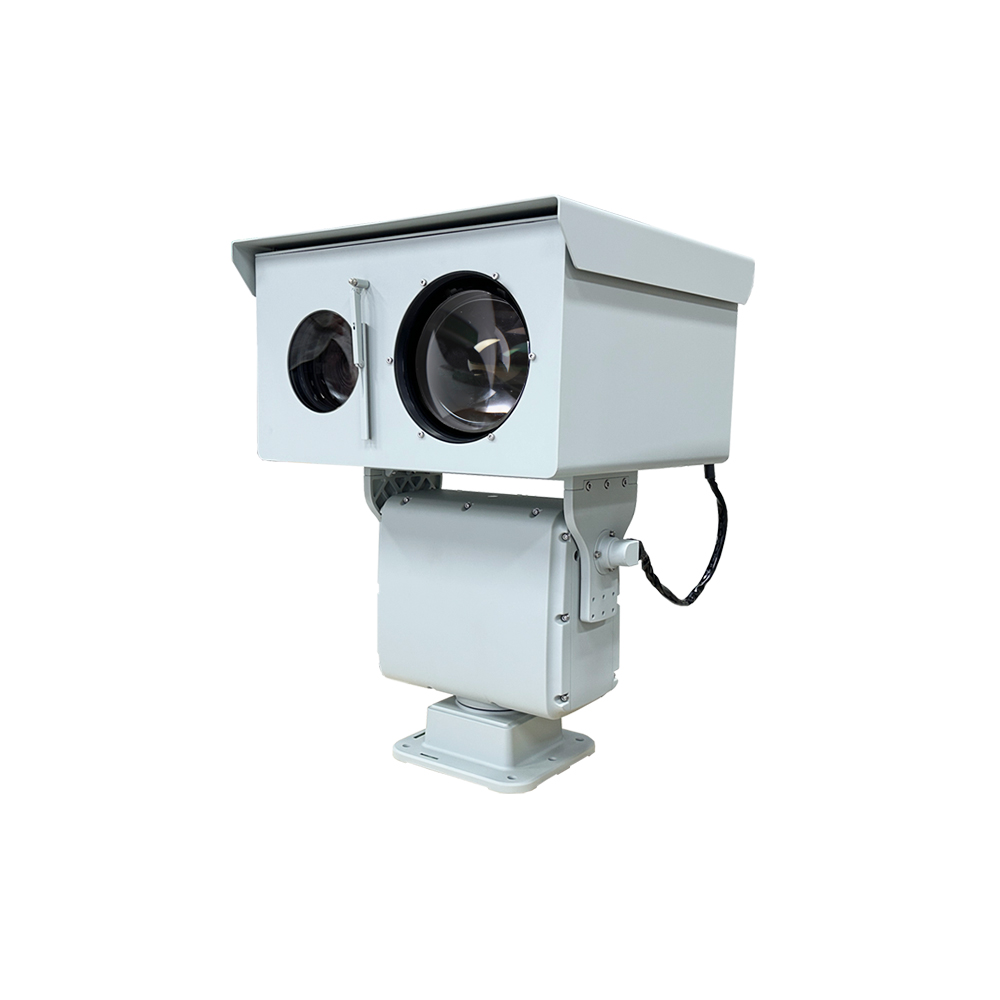
Hardware designs vary by site and coverage needs. Fixed panoramic systems can combine several lenses to provide 180-degree or 360-degree coverage without moving parts. PTZ systems may combine thermal and optical cameras in one housing for long-range tracking, while modular systems can combine radar, thermal, and long-range optical cameras on one mount. Integrated systems can reduce the number of power and network connections, but heavier systems need stronger mounting structures and careful wind-load calculations. For example, a 60-pound dual-sensor PTZ with radar on a 40-foot pole may require vibration control to keep images stable in high winds.
Sensor fusion combines data from different sensors to create one trackable event. Radar can detect movement, distance, and speed, thermal imaging can confirm a heat source, and optical cameras can provide visual details. For example, if radar detects movement but thermal does not detect a heat source, the system may identify the event as environmental movement. If radar detects a target at 30 miles per hour and thermal confirms a large heat signature, the system can classify it as a vehicle and direct the optical camera to capture more details. This helps filter out false alarms caused by animals, rain, or moving vegetation.
Visual sensors provide high-resolution identification. They capture color rendering, facial details, clothing characteristics, and license plate characters. This modality remains mandatory for evidentiary recording and post-incident investigations. Modern EO sensors feature high megapixel counts, powerful motorized varifocal lenses, and optical zoom capabilities ranging from 30x to 50x. However, visual sensors have inherent physical limitations. They struggle in low light, heavy fog, driving rain, and snow. Visual camouflage can also defeat standard optical detection. A multi-sensor approach mitigates these weaknesses. When environmental conditions degrade visual clarity, other modalities take over the primary detection role.
Thermal cameras detect infrared radiation emitted by objects. They create high-contrast images based on heat signatures rather than visible light. This modality excels in zero-light environments. Uncooled VOx microbolometer thermal sensors provide long-range detection capabilities far exceeding standard optical cameras. They easily defeat visual camouflage and detect targets hiding in dense brush or shadows. Thermal imaging remains immune to glare from headlights or the sun. Its primary limitation is the lack of visual detail. You cannot identify a specific face, read text, or determine clothing color using thermal imaging. Thermal sensors also cannot see through standard glass windows. Combining thermal detection with optical verification solves these operational gaps.
Radar and LiDAR provide volumetric detection and precise spatial mapping. Frequency Modulated Continuous Wave (FMCW) radar emits radio waves to detect objects, measure distance, and track speed. It covers wide areas and penetrates rain, fog, and snow effectively. LiDAR uses pulsed laser light to create highly detailed 3D point clouds of the environment. Both technologies excel at tracking targets across vast open spaces. They provide exact geospatial coordinates of an intruder. Their main limitation is classification. Radar can tell you a target is moving at five miles per hour at a distance of 400 meters. It cannot tell you if the target is a human, a deer, or a slow-moving vehicle. Optical confirmation is necessary to classify the exact nature of the radar track.
Acoustic sensors monitor the environment for specific sound signatures. They detect gunshots, breaking glass, or the high-frequency whine of drone rotors. Seismic sensors detect ground vibrations caused by footsteps, digging, or heavy vehicles. These sensors provide an invisible perimeter protection line. Their true value emerges during integration. An acoustic sensor detects a gunshot and calculates the triangulation data based on the sound wave's arrival time at different microphones. It instantly sends the coordinates to a PTZ camera. The camera slews to the exact location of the anomaly before a human operator even registers the sound. This automated trigger mechanism accelerates threat acquisition.
| Sensor Modality | Primary Strength | Environmental Weakness | Sensor Fusion Benefit |
|---|---|---|---|
| Electro-Optical (EO) | High-resolution visual identification and color. | Poor performance in low light, fog, and rain. | Provides final visual confirmation of threats detected by radar/thermal. |
| Thermal Imaging | Zero-light detection and camouflage defeat. | Cannot identify faces, text, or see through glass. | Maintains detection continuity when optical visibility drops to zero. |
| Radar / LiDAR | Precise distance, speed, and 3D spatial tracking. | Cannot classify the visual identity of the target. | Directs optical/thermal PTZ cameras to exact target coordinates. |
| Acoustic / Seismic | Detects unseen events (gunshots, drones, footsteps). | Susceptible to high ambient background noise. | Acts as an automated early-warning trigger for visual sensors. |
Electrical substations, nuclear facilities, and water treatment plants require absolute perimeter security. These sites are often located in remote, unlit areas. Weather conditions frequently degrade standard video security. Copper theft and physical sabotage present constant threats to grid stability. A Multi-Sensor Security System provides reliable detection regardless of the environment. Thermal sensors monitor fence lines in complete darkness. Radar detects approaching vehicles long before they reach the perimeter. This early warning capability allows security teams to dispatch local law enforcement or trigger automated deterrents like strobe lights and acoustic hailing devices before the intruder breaches the fence.
Airports, ports, and border areas need to monitor large and complex spaces. Radar and LiDAR can track aircraft, drones, vehicles, and vessels over wide areas, while thermal sensors can help maintain detection in coastal fog or low light. Mobile multi-sensor systems can also monitor remote border areas and send verified alerts to centralized control centers.
Data centers and other high-security sites need fast and accurate perimeter detection. A combined system can detect fence movement, confirm a heat signature, and record visual evidence at the same time. Security Operation Centers (SOCs) can receive the event location, video, and threat information together, reducing the need to check multiple camera feeds manually.
Before upgrading, define what the current system must achieve. Set clear requirements for detection range, target identification, and response time based on actual site conditions. For example, if a system cannot reliably detect a person at 500 meters in heavy rain, it may not meet the requirements of a high-security perimeter. Multi-sensor technology becomes more useful when weather, lighting, distance, or other environmental factors regularly reduce the performance of single-sensor systems.
Too many false alarms waste security staff time and can cause operators to ignore future alerts. Track how often false alarms occur and how much labor is spent checking them. Sensor fusion can reduce this problem by comparing data from radar, thermal, and other sensors before sending an alert. This helps separate real people or vehicles from animals, debris, and other environmental movement.
Outdoor hardware must be able to handle water, dust, impact, and temperature changes. Check IP66, IP67, or IP68 ratings for dust and water protection, IK10 for impact resistance, and NEMA 4X for protection against dust, water, and corrosion. In very cold or hot environments, built-in heaters and blowers can help protect the lens and internal electronics.
| Rating Standard | Protection Level | Ideal Deployment Environment |
|---|---|---|
| IP66 / IP67 | Dust protection and strong water resistance | Outdoor perimeters, exposed poles, and heavy rain areas |
| IK10 | High impact resistance, up to 20 joules | Low-mounted systems, urban areas, and high-risk locations |
| NEMA 4X | Protection from dust, water, and corrosion | Coastal sites, ports, and chemical facilities |
The system should work with the site's existing Video Management System (VMS) and other security software. Open systems usually provide more flexibility than closed systems. Check compatibility with platforms such as Milestone and Genetec, as well as PSIM systems that use standard APIs. ONVIF Profiles S, G, T, and M can help confirm that cameras, sensors, and analytics can communicate with third-party systems.
Traditional systems may send large amounts of raw video to a central server, which increases bandwidth use and delay. Edge computing processes data directly at the camera or sensor, allowing faster AI-based detection and tracking. Local AI can support functions such as threat classification, loitering detection, and automatic PTZ tracking. Only important events or selected high-resolution video need to be sent across the network, reducing traffic.
Multi-sensor systems generate more data than standard cameras, so network capacity should be checked before deployment. Multiple video and radar streams can place heavy loads on switches and storage systems. Standard PoE may not provide enough power for larger sensor platforms, which may require PoE++ (802.3bt) or dedicated power supplies. Large sites may also need fiber connections and a network design that supports multiple users viewing the same streams.
Government and critical infrastructure projects may require specific compliance and security measures. In the United States, NDAA Section 889 can restrict certain equipment in government projects. Buyers should also check for HTTPS/TLS encryption, encrypted local storage, and 802.1X network authentication. These measures help protect data and prevent unauthorized devices from accessing the security network.
Audit your perimeter to identify specific environmental vulnerabilities where single-modality cameras currently fail.
Define your operational success criteria based on required detection ranges and acceptable false alarm rates.
Verify network bandwidth and power infrastructure capabilities before selecting heavy multi-sensor payloads.
Prioritize open-architecture systems with ONVIF compliance to ensure seamless VMS integration and avoid vendor lock-in.
Deploy edge-based analytics to filter environmental noise and deliver only verified threat alerts to your security operations center.
A: Sensor fusion cross-references data from multiple modalities, like radar and thermal, to verify threats. This process eliminates false alarms caused by weather, animals, or shadows, ensuring operators only respond to actual security breaches.
A: Yes. By utilizing thermal imaging and radar, the system detects, tracks, and classifies targets without any ambient light. Thermal sensors read heat signatures, while radar maps physical movement.
A: Not necessarily. If you select hardware built on open standards like ONVIF, the multi-sensor feeds and metadata will integrate directly into major VMS platforms like Milestone or Genetec.
A: Edge computing processes AI analytics directly on the camera hardware rather than a central server. This reduces latency, enables real-time autonomous PTZ tracking, and significantly lowers network bandwidth consumption.
A: Integrated units with multiple lenses, radar panels, and internal heaters draw significant power. They typically require PoE++ (up to 90 watts) or dedicated 24VAC/12VDC power supplies, exceeding standard PoE capabilities.
A: NDAA Section 889 prohibits US federal agencies and their contractors from using specific foreign-made telecommunications and video security equipment. Compliance ensures your infrastructure meets federal cybersecurity and supply chain regulations.