Author: Site Editor Publish Time: 2026-04-01 Origin: Site
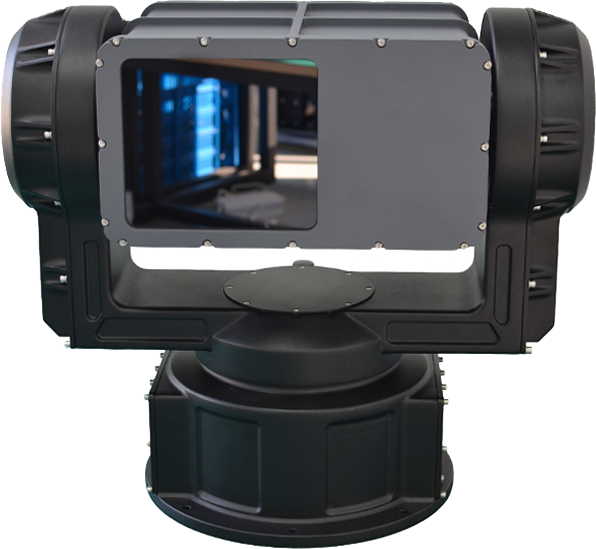
Passive infrared detection is a sensing method that identifies objects based on the thermal radiation they naturally emit.
Every object above absolute zero emits infrared energy. By capturing these emissions, infrared sensors can detect targets without requiring any external illumination or signal transmission.
| Feature | Active Radar | Passive Infrared |
|---|---|---|
| Signal Emission | Yes | No |
| Detectability | High | Extremely Low |
| Anti-Jamming | Limited | Strong |
| Power Consumption | Higher | Lower |
| Environmental Dependence | Moderate | Low (works in darkness, fog) |
This fundamental difference makes passive systems significantly more discreet and resilient.
The heart of the system, responsible for capturing thermal radiation.
Options include:
Uncooled detectors (cost-effective, robust)
Cooled detectors (higher sensitivity, longer range)
Lenses focus infrared radiation onto the detector, determining field of view and detection distance.
Converts raw thermal data into visual images and extracts meaningful information.
Enable:
Target detection
Classification (human, vehicle, UAV)
Motion tracking
Behavior analysis
By combining passive infrared detection with panoramic scanning, the system evolves into what is often referred to as thermal imaging radar.
Key transformation steps include:
Continuous 360° scanning
Image stitching into panoramic views
Real-time tracking of multiple targets
Integration with security platforms
This creates a radar-like capability—without emitting any signals.
No emission means no exposure.
Unaffected by electromagnetic noise or RF jamming.
Works in:
Nighttime
Fog
Smoke
Complex lighting environments
Lower power consumption compared to active systems.
For balanced understanding:
Performance may vary with extreme temperature uniformity
Requires advanced algorithms to reduce false positives
High-end systems may involve higher initial investment
However, ongoing advancements in AI and sensor technology continue to mitigate these limitations.
Passive infrared technology is evolving rapidly, with key trends including:
AI-driven target recognition
Higher resolution panoramic imaging
Integration with multi-sensor systems (visible + thermal + LiDAR)
Edge computing for real-time decision-making
Passive infrared detection is not just a supporting technology—it is the foundation of next-generation security systems.
By enabling silent, reliable, and intelligent detection, it powers thermal imaging radar and sets a new standard for modern security solutions.