Author: Site Editor Publish Time: 2026-02-24 Origin: Site
Long Range Thermal Camera technology is changing how industries monitor equipment, enhance safety, and boost efficiency. By spotting overheating components and hidden defects, these cameras provide real-time insights that cut costs and prevent downtime. Across manufacturing, energy, construction, and oil & gas, thermal imaging gives businesses a clear advantage. Discover how long-range thermal cameras help prevent failures, improve quality, and create safer, smarter operations.
Thermal cameras help us see heat instead of light, and they reveal temperature patterns our eyes normally miss during routine inspections. In many industries, they have become essential tools for safety, maintenance, and quality control. A Long Range Thermal Camera extends this capability even further by detecting heat signatures from significant distances, making it ideal for large facilities, outdoor monitoring, and perimeter security.
A thermal camera is a device that detects infrared radiation emitted by objects and converts it into a visual image. Instead of capturing reflected visible light like a traditional camera, it measures heat energy produced by surfaces. We often call the resulting image a thermogram.
Regular cameras depend on visible light to produce images. If the lighting is poor, their performance drops. Thermal cameras, however, operate independently of lighting conditions because they detect emitted heat rather than reflected light.
| Feature | Thermal Camera | Regular Camera |
|---|---|---|
| Detects | Infrared heat energy | Visible light |
| Works in total darkness | Yes | No |
| Identifies temperature differences | Yes | No |
| Useful for predictive maintenance | Yes | Limited |
| Requires external lighting | No | Yes |
Because of this difference, thermal cameras can detect hidden problems early. A Long Range Thermal Camera enhances this advantage by identifying heat anomalies across wide areas such as production yards, substations, pipelines, or building exteriors.
Thermal imaging technology converts infrared radiation into electronic signals, then processes those signals into temperature-mapped visuals. Software assigns colors to different temperature levels, allowing users to quickly distinguish between hot and cold regions.
Unlike visible inspection, thermal imaging focuses purely on energy output. It does not depend on surface color, texture, or lighting. That distinction makes it especially valuable for industrial diagnostics and remote monitoring.
All objects emit infrared radiation based on temperature. Hotter objects emit more energy. We cannot see these infrared waves, but a thermal camera can detect them.
Industrial equipment generates heat during operation. Friction, electrical resistance, and mechanical movement all increase surface temperature. Even buildings release heat through weak insulation. Thermal imaging captures these temperature differences instantly.
Inside the camera, a microbolometer sensor reacts to infrared radiation. It changes electrical resistance based on heat intensity. These small changes translate into precise temperature readings.
A Long Range Thermal Camera uses advanced sensors and specialized optics to detect faint heat signatures across large distances while maintaining measurement accuracy.
The sensor sends signals to a processor. The processor converts them into digital temperature data. Software then assigns colors to different temperature levels, creating a thermogram.
Engineers use these thermal images to identify hotspots and abnormal heat patterns before equipment fails.
Thermal cameras use color palettes to show temperature contrast clearly. Common options include white-hot, black-hot, ironbow, and rainbow. Each palette highlights heat differences in a slightly different way, helping users analyze thermal data more effectively.
Every thermal imaging camera relies on several essential components working together.
This component senses infrared radiation directly. Its resolution determines how detailed the thermal image appears. Higher resolution improves defect detection, especially for small or distant targets. Sensitivity also plays a key role in long-range applications.
Thermal lenses focus infrared radiation onto the detector. They differ from standard glass lenses because they must transmit infrared wavelengths. Long focal length lenses increase detection range, which is critical for perimeter monitoring and large-scale industrial facilities using a Long Range Thermal Camera.
The processor converts raw sensor data into usable visual output. It enhances contrast, reduces noise, and supports advanced analytics. Modern processors may include AI-based anomaly detection for automated alerts.
The display presents thermal images in real time. Software tools allow users to measure temperature points, set thresholds, generate reports, and integrate data into maintenance systems. Many industrial systems connect to plant networks, enabling remote monitoring and predictive maintenance planning.
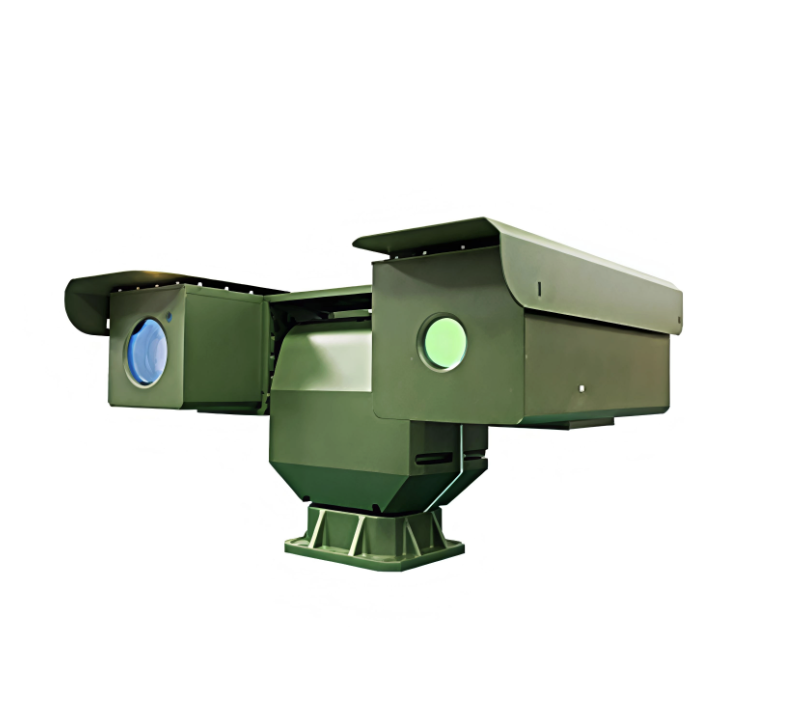
A thermal camera helps us identify problems early by visualizing temperature differences across equipment, buildings, and production systems. When we use a Long Range Thermal Camera, we can monitor large areas or distant assets without physical contact, improving both safety and efficiency.
Overheating components: Motors, bearings, transformers, and circuit boards often show rising temperatures before failure occurs. It allows us to detect abnormal heat buildup early and schedule maintenance before breakdowns disrupt operations.
Electrical resistance and loose connections: Loose terminals or overloaded circuits create localized hotspots due to increased resistance. Thermal imaging reveals these risks during live operation, helping prevent fire hazards and unexpected shutdowns.
Friction and mechanical wear: When lubrication degrades or alignment shifts, moving parts generate excess heat. We can spot uneven thermal patterns around shafts or rollers and correct issues before severe damage develops.
Insulation defects and energy loss: Heat escaping from pipes, walls, tanks, or roofs becomes visible through thermal contrast. A Long Range Thermal Camera is especially useful for scanning large warehouses or elevated systems from a safe distance.
Moisture intrusion: Wet materials heat and cool differently than dry ones. Thermal imaging detects subtle temperature variations caused by hidden leaks inside walls, ceilings, or composite structures.
Process temperature deviations: Many manufacturing lines depend on precise thermal control. If heating or cooling becomes uneven, it affects product quality, and thermal cameras help us detect those variations immediately.
Structural weaknesses: Cracks, voids, or delamination disrupt normal heat distribution across surfaces. By observing temperature inconsistencies, we can identify potential structural concerns before visible damage appears.
Hidden defects invisible to the naked eye: Internal bonding failures, blocked pipelines, battery imbalances, and electronic overheating rarely show visible signs. Thermal imaging exposes these concealed problems, giving industries a powerful non-invasive inspection tool.
Thermal imaging changes how we manage equipment, safety, and production quality. A Long Range Thermal Camera expands this advantage across wide facilities, remote assets, and high-risk zones. It gives us visibility where traditional inspection methods fall short.
Thermal cameras measure surface temperature without physical contact. We inspect live systems while production continues running. No shutdown required.
It improves safety in hazardous areas such as high-voltage rooms, furnaces, or chemical plants. Teams stay at a safe distance. A Long Range Thermal Camera increases inspection range across large yards or elevated structures.
| Traditional Inspection | Thermal Imaging |
|---|---|
| Requires close access | Operates at distance |
| May require shutdown | Works during operation |
| Higher safety risk | Reduced exposure |
Heat anomalies appear instantly on screen. We do not wait for smoke or visible damage.
Thermal imaging helps identify abnormal patterns in motors, panels, pipelines, and production lines. It detects small temperature shifts before they escalate into failure. This real-time visibility improves response speed. They allow us to act immediately.
Thermal cameras support condition-based maintenance strategies. Instead of fixing equipment after failure, we monitor its thermal behavior over time. Facilities using predictive approaches often reduce maintenance costs by 30–40% compared to reactive repair models. Fewer emergency repairs occur. Downtime decreases.
A Long Range Thermal Camera monitors distant transformers, outdoor substations, or perimeter equipment continuously. It reduces manual inspection labor.
Many industrial processes depend on stable heat distribution. Thermal imaging verifies curing, welding, molding, and heat treatment operations in real time. If temperature becomes uneven, we see it immediately. It prevents defective batches. It reduces scrap rates and warranty claims.
Common quality applications include:
Monitoring oven uniformity
Verifying weld integrity
Checking composite curing cycles
Inspecting electronics for overheating
It strengthens process consistency across production lines.
Excess heat accelerates component wear. Early detection prevents long-term damage. We identify overheating bearings, overloaded circuits, or stressed mechanical parts before breakdown occurs. Maintenance becomes planned instead of reactive. Equipment lasts longer under controlled conditions.
Thermal cameras reveal hidden energy loss in buildings and machinery. Heat escaping through insulation gaps becomes visible immediately.
They support thermal energy audits across factories, warehouses, and processing plants. A Long Range Thermal Camera helps inspect rooftops, tanks, or extended piping networks safely. Reduced heat loss leads to lower operational costs. Energy waste declines.
Electrical faults generate heat before sparks appear. Thermal imaging detects these early warning signs. It identifies fire risks in overloaded systems, failing transformers, or overheated wiring. Teams address hazards before accidents occur.
It also supports compliance efforts. Many safety programs include routine thermal inspections as part of preventive risk management.
A Long Range Thermal Camera provides clear heat insights across industries, helping teams act faster and safer while improving efficiency.
| Industry | Key Applications | Benefits |
|---|---|---|
| Manufacturing | Process temperature monitoring, electrical inspections, mechanical equipment checks, product quality verification, smart factory integration | Reduce defects, prevent equipment failure, extend machinery life, support predictive maintenance |
| Energy & Utilities | Power line and transformer inspections, solar panel efficiency testing, substation monitoring | Identify hot spots, prevent outages, enable safer remote inspections |
| Construction & Building | Insulation and HVAC evaluation, moisture detection, structural defect identification | Detect energy loss, hidden moisture, structural issues quickly and safely |
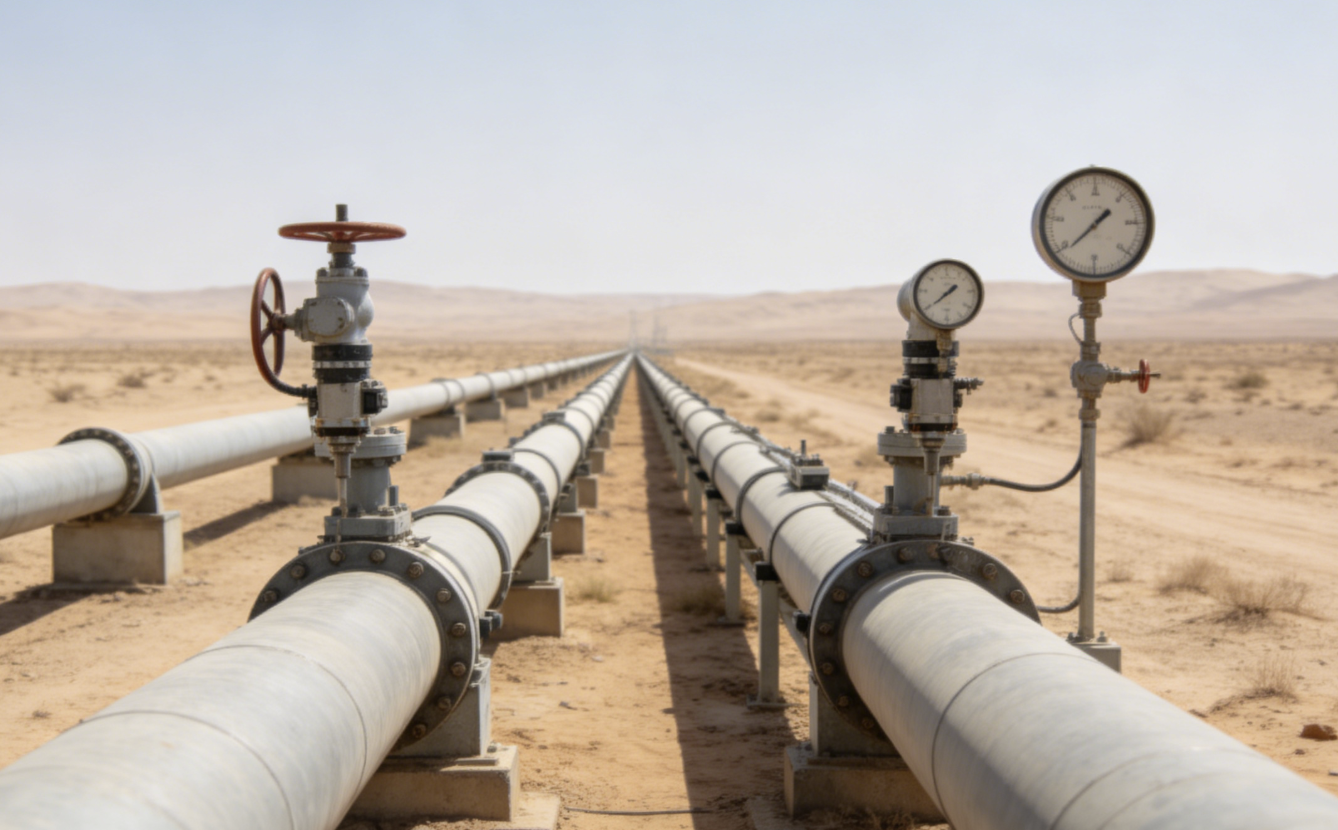
| Oil & Gas | Pipeline monitoring, leak detection, refinery equipment inspection | Spot leaks early, prevent downtime, scan hazardous areas safely |
| Food & Pharma | Controlled environment monitoring, cold chain validation, sanitation compliance | Maintain product quality, ensure safety, support regulatory standards |
| Automotive & Electronics | Circuit board heat mapping, battery testing, weld inspection | Detect overheating, prevent failures, ensure consistent product quality |
A: Infrared cameras capture heat energy and display temperature differences as images, while standard infrared sensors detect heat for measurement without visualizing it. Thermal cameras convert infrared radiation into thermograms for easy analysis.
A: Yes, they are non-contact devices that measure temperature remotely, making inspections safe in hazardous environments like electrical panels, chemical plants, or high-temperature equipment.
A: No, they cannot see through walls. They detect surface temperatures, so they reveal heat patterns on walls, floors, and ceilings but not objects behind solid barriers.
A: Yes, calibration ensures precise temperature readings. Industrial cameras often follow scheduled maintenance and recalibration procedures to maintain accuracy.
Long Range Thermal Cameras are more than just tools—they’re a game-changer for modern industries. By revealing hidden heat patterns and potential faults early, they empower teams to act fast, reduce downtime, and maintain high-quality standards across operations. Imagine catching issues before they become costly problems, all without halting production or putting anyone at risk.
Ryan Optics Technology Co., Ltd. offers advanced thermal imaging solutions designed for real-world industrial challenges. Explore our range of long-range thermal cameras and see how your facility can operate smarter, safer, and more efficiently starting today.