| Availability: | |
|---|---|
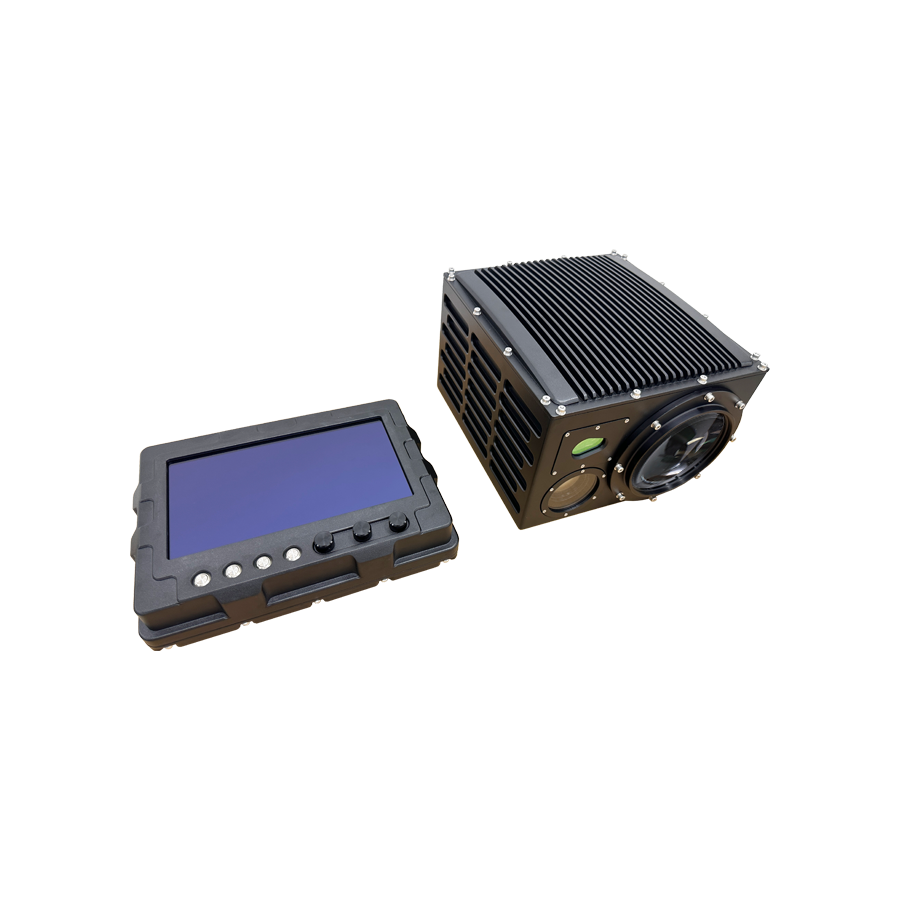
The Multi-Spectral Imaging System is an advanced electro-optical technology that captures image data across 8+ discrete spectral bands simultaneously, transcending the limitations of human vision and conventional cameras. By separating incoming light into specific wavelengths—including visible, near-infrared, and short-wave infrared—using precision optical filters and prisms, the system creates a "data cube" that combines spatial and spectral information. Each pixel carries a unique spectral fingerprint, revealing intrinsic properties of materials, objects, or environments that are invisible to the naked eye. This solution integrates precision optics, spectroscopy, and AI-driven data processing to deliver non-destructive, quantitative analysis, addressing complex optical challenges in agriculture, military, industrial inspection, and cultural heritage conservation. As an all-weather, AI-powered system, it transforms multi-dimensional data into actionable intelligence, enabling users to make precise, data-driven decisions in diverse environments.

The system’s core advantage lies in its ability to achieve multi-dimensional target perception, going beyond traditional color imaging to capture spectral data that reveals hidden details. It operates across 8–16 discrete spectral bands (customizable based on application), including visible light (400–700 nm), near-infrared (700–1700 nm), and short-wave infrared (1700–2500 nm). This broad spectral coverage allows it to distinguish between materials with similar visual appearances—such as healthy vs. diseased crops, or authentic vs. counterfeit artwork—by analyzing their unique spectral responses. The integrated "data cube" processing enables users to visualize and analyze spectral information at the pixel level, turning raw data into meaningful insights.
A key feature of the Multi-Spectral Imaging System is its non-destructive, non-contact inspection capability, allowing precise analysis without damaging the target object. Leveraging advanced AI algorithms and spectral signature databases, the system translates subtle spectral differences into quantifiable data—such as vegetation health indices (NDVI), material composition percentages, or temperature distributions. For example, in industrial sorting, it can identify foreign materials with an accuracy of 99.5%, while in agriculture, it measures crop moisture content with a margin of error of ±2%. This quantitative analysis elevates decision-making from subjective judgment to objective, repeatable results, making it invaluable for quality control, scientific research, and resource management.
Unlike standalone hardware, this system is a highly integrated solution that combines optics, spectroscopy, and AI processing to deliver end-to-end application-specific results. It features real-time data processing (latency ≤1 second) and customizable software modules tailored to industry needs—such as variable rate application maps for precision agriculture, foreign object detection for manufacturing, or camouflage detection for military use. The system seamlessly integrates with drones, inspection vehicles, and fixed platforms, supporting both mobile and stationary deployments. Its open API allows integration with third-party software and IoT systems, enabling centralized data management and remote monitoring.
Engineered for rugged performance, the Multi-Spectral Imaging System operates reliably in harsh conditions, with an operating temperature range of -30℃ to 70℃ and IP67 protection against dust and water. It features anti-glare, fog-penetration, and low-light enhancement technologies, ensuring consistent performance in rain, fog, snow, or bright sunlight. The system’s robust housing resists corrosion and physical impact, making it suitable for outdoor applications like environmental monitoring, border surveillance, and infrastructure inspection. For low-power mobile deployments (e.g., drone-mounted), it consumes only 35W during operation, extending battery life for extended missions.
In military and police settings, the system serves as a powerful tool for all-weather, anti-camouflage target detection. It penetrates light fog, smoke, and dust, providing clear imaging in pitch-dark conditions (0 lux) to support patrols, border surveillance, and counter-terrorism operations. Its near-infrared and short-wave infrared bands can detect personnel or equipment concealed in vegetation or under camouflage nets—exposing targets whose spectral signatures differ from natural foliage. For VIP protection and major event security, it identifies potential risks through thermal hotspot detection and abnormal movement analysis, providing critical early warning for security teams.
Mounted on emergency vehicles (police cars, fire trucks, ambulances) and traffic monitoring stations, the system enhances visual capabilities in adverse conditions. It cuts through heavy smoke, rain, or fog to provide drivers with clear road visibility, ensuring safe and rapid response. In traffic accident investigation, it detects subtle marks on vehicle surfaces or skid residue using spectral analysis, supporting accurate scene reconstruction. For public safety, it identifies left-behind objects, crowd density anomalies, and abnormal body temperature distributions (detection accuracy ±0.3℃), enabling proactive risk mitigation in crowded areas.
For industrial inspection vehicles in oil, gas, and power sectors, the system enables rapid, non-destructive inspection of linear infrastructure. It detects anomalies like pipeline insulation damage, electrical equipment overheating, or structural corrosion by analyzing spectral changes in materials. In agriculture and forestry, drone-mounted systems assess crop health, pest infestations, and water stress across large areas, generating variable rate application maps that optimize resource use. In cultural heritage conservation, it reveals hidden layers or restoration work in ancient paintings and artifacts without physical contact, supporting preservation efforts.
The standard system supports 8–16 discrete spectral bands, with customization options for up to 24 bands based on specific application requirements. We work with you to select the optimal wavelength range—from visible light to short-wave infrared—to address your unique optical challenges.
Yes, the system features on-board AI processing with a latency of ≤1 second, enabling real-time data analysis and alert generation. It can transmit processed insights—such as defect detection alerts or target identification—to a central control platform or mobile device, supporting immediate decision-making.
The detection distance varies by spectral band and application: in visible light, it can identify targets up to 3km; in near-infrared, up to 5km; and in short-wave infrared (for industrial or military use), up to 8km. Customized lens options are available to extend range for specific use cases.
Absolutely. The system is designed for seamless integration with most drones, inspection vehicles, and fixed installations. It features a lightweight design (starting at 4.5kg) for drone mounting and standard mounting interfaces for vehicle integration. We provide integration support and customized brackets to ensure compatibility with your existing platforms.
The Multi-Spectral Imaging System is an advanced electro-optical technology that captures image data across 8+ discrete spectral bands simultaneously, transcending the limitations of human vision and conventional cameras. By separating incoming light into specific wavelengths—including visible, near-infrared, and short-wave infrared—using precision optical filters and prisms, the system creates a "data cube" that combines spatial and spectral information. Each pixel carries a unique spectral fingerprint, revealing intrinsic properties of materials, objects, or environments that are invisible to the naked eye. This solution integrates precision optics, spectroscopy, and AI-driven data processing to deliver non-destructive, quantitative analysis, addressing complex optical challenges in agriculture, military, industrial inspection, and cultural heritage conservation. As an all-weather, AI-powered system, it transforms multi-dimensional data into actionable intelligence, enabling users to make precise, data-driven decisions in diverse environments.

The system’s core advantage lies in its ability to achieve multi-dimensional target perception, going beyond traditional color imaging to capture spectral data that reveals hidden details. It operates across 8–16 discrete spectral bands (customizable based on application), including visible light (400–700 nm), near-infrared (700–1700 nm), and short-wave infrared (1700–2500 nm). This broad spectral coverage allows it to distinguish between materials with similar visual appearances—such as healthy vs. diseased crops, or authentic vs. counterfeit artwork—by analyzing their unique spectral responses. The integrated "data cube" processing enables users to visualize and analyze spectral information at the pixel level, turning raw data into meaningful insights.
A key feature of the Multi-Spectral Imaging System is its non-destructive, non-contact inspection capability, allowing precise analysis without damaging the target object. Leveraging advanced AI algorithms and spectral signature databases, the system translates subtle spectral differences into quantifiable data—such as vegetation health indices (NDVI), material composition percentages, or temperature distributions. For example, in industrial sorting, it can identify foreign materials with an accuracy of 99.5%, while in agriculture, it measures crop moisture content with a margin of error of ±2%. This quantitative analysis elevates decision-making from subjective judgment to objective, repeatable results, making it invaluable for quality control, scientific research, and resource management.
Unlike standalone hardware, this system is a highly integrated solution that combines optics, spectroscopy, and AI processing to deliver end-to-end application-specific results. It features real-time data processing (latency ≤1 second) and customizable software modules tailored to industry needs—such as variable rate application maps for precision agriculture, foreign object detection for manufacturing, or camouflage detection for military use. The system seamlessly integrates with drones, inspection vehicles, and fixed platforms, supporting both mobile and stationary deployments. Its open API allows integration with third-party software and IoT systems, enabling centralized data management and remote monitoring.
Engineered for rugged performance, the Multi-Spectral Imaging System operates reliably in harsh conditions, with an operating temperature range of -30℃ to 70℃ and IP67 protection against dust and water. It features anti-glare, fog-penetration, and low-light enhancement technologies, ensuring consistent performance in rain, fog, snow, or bright sunlight. The system’s robust housing resists corrosion and physical impact, making it suitable for outdoor applications like environmental monitoring, border surveillance, and infrastructure inspection. For low-power mobile deployments (e.g., drone-mounted), it consumes only 35W during operation, extending battery life for extended missions.
In military and police settings, the system serves as a powerful tool for all-weather, anti-camouflage target detection. It penetrates light fog, smoke, and dust, providing clear imaging in pitch-dark conditions (0 lux) to support patrols, border surveillance, and counter-terrorism operations. Its near-infrared and short-wave infrared bands can detect personnel or equipment concealed in vegetation or under camouflage nets—exposing targets whose spectral signatures differ from natural foliage. For VIP protection and major event security, it identifies potential risks through thermal hotspot detection and abnormal movement analysis, providing critical early warning for security teams.
Mounted on emergency vehicles (police cars, fire trucks, ambulances) and traffic monitoring stations, the system enhances visual capabilities in adverse conditions. It cuts through heavy smoke, rain, or fog to provide drivers with clear road visibility, ensuring safe and rapid response. In traffic accident investigation, it detects subtle marks on vehicle surfaces or skid residue using spectral analysis, supporting accurate scene reconstruction. For public safety, it identifies left-behind objects, crowd density anomalies, and abnormal body temperature distributions (detection accuracy ±0.3℃), enabling proactive risk mitigation in crowded areas.
For industrial inspection vehicles in oil, gas, and power sectors, the system enables rapid, non-destructive inspection of linear infrastructure. It detects anomalies like pipeline insulation damage, electrical equipment overheating, or structural corrosion by analyzing spectral changes in materials. In agriculture and forestry, drone-mounted systems assess crop health, pest infestations, and water stress across large areas, generating variable rate application maps that optimize resource use. In cultural heritage conservation, it reveals hidden layers or restoration work in ancient paintings and artifacts without physical contact, supporting preservation efforts.
The standard system supports 8–16 discrete spectral bands, with customization options for up to 24 bands based on specific application requirements. We work with you to select the optimal wavelength range—from visible light to short-wave infrared—to address your unique optical challenges.
Yes, the system features on-board AI processing with a latency of ≤1 second, enabling real-time data analysis and alert generation. It can transmit processed insights—such as defect detection alerts or target identification—to a central control platform or mobile device, supporting immediate decision-making.
The detection distance varies by spectral band and application: in visible light, it can identify targets up to 3km; in near-infrared, up to 5km; and in short-wave infrared (for industrial or military use), up to 8km. Customized lens options are available to extend range for specific use cases.
Absolutely. The system is designed for seamless integration with most drones, inspection vehicles, and fixed installations. It features a lightweight design (starting at 4.5kg) for drone mounting and standard mounting interfaces for vehicle integration. We provide integration support and customized brackets to ensure compatibility with your existing platforms.