| Availability: | |
|---|---|
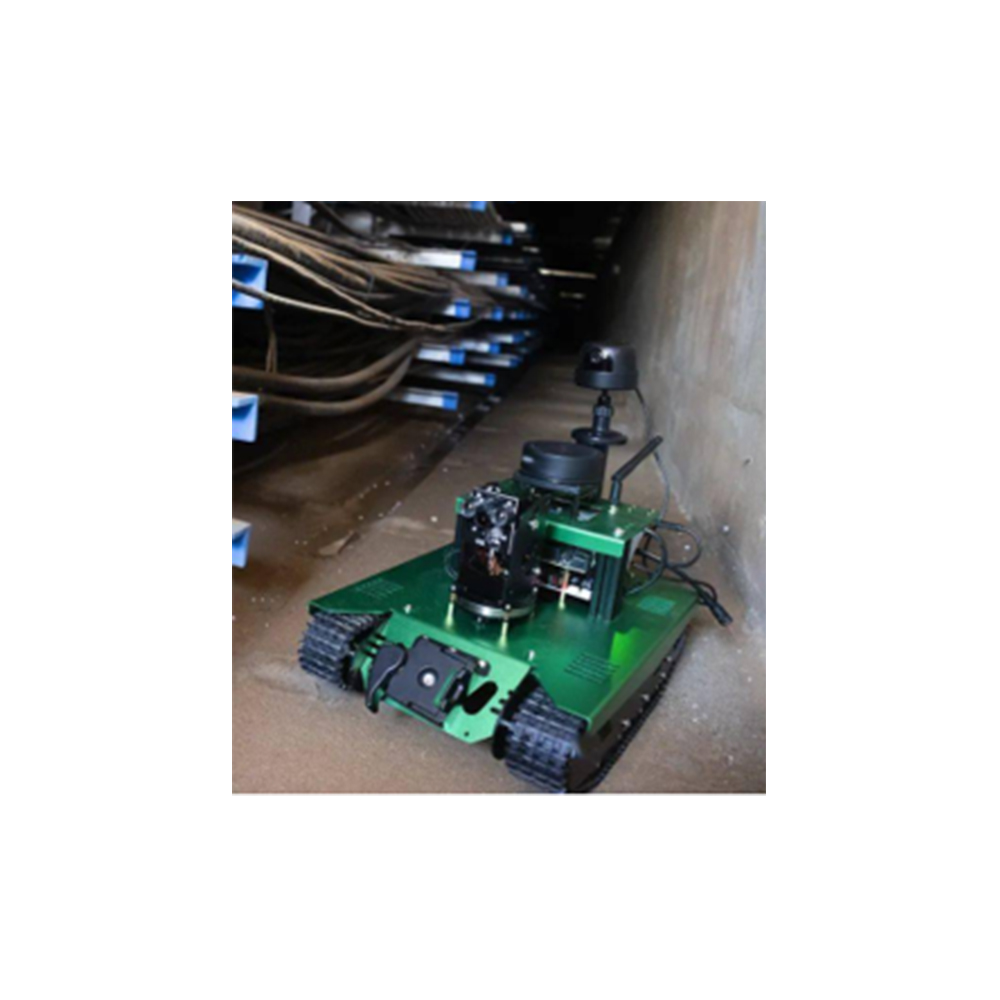
The All-Terrain Adaptable Tracked Robot is a rugged, high-performance inspection and operation solution developed by IMS (Jinan) Robot Technology Co., Ltd., designed to excel in harsh and complex environments. Leveraging the company’s long-term technical accumulation in precision transmission and intelligent terminals, this robot integrates multi-sensor monitoring, AI-driven analysis, and robust mobility to replace manual operations in high-risk, hard-to-reach areas. It is widely applicable in industries such as power, metallurgy, petrochemicals, and mining, providing reliable support for equipment safety inspection, hazard detection, and production management optimization. Its tracked design ensures stable traction on uneven surfaces, muddy terrain, and steep slopes, while its industrial-grade durability enables continuous operation in extreme temperature and humidity conditions.
Equipped with heavy-duty rubber tracks, the robot delivers strong grip and shock absorption, easily adapting to rough terrains such as gravel roads, slopes (≤20°), and water-logged areas (≤200mm wading depth). This eliminates the limitations of traditional wheeled robots in complex environments, ensuring uninterrupted operation even in harsh field conditions.
Integrated with a suite of high-precision sensors, the robot realizes comprehensive environmental perception:
Infrared Thermal Imaging: Non-contact temperature measurement for equipment, pipelines, and valves to detect abnormal heating and prevent safety hazards.
Hazardous Gas Detection: Real-time monitoring of CH₄, H₂S, CO, and O₂ concentrations, with automatic alarms when thresholds are exceeded.
Acoustic Analysis: Collects on-site audio, compares it with preset databases, and identifies equipment abnormalities (e.g., mechanical noise) through AI learning.
The robot adopts advanced image acquisition modeling and AI deep learning algorithms to accurately recognize:
Digital/analog meter readings (replacing manual transcription).
Valve switch states and liquid levels.
Equipment defects (e.g., corrosion, leakage, aging).
All data is analyzed in real time, and early warnings are pushed to the central control platform to avoid potential accidents.
Supports autonomous inspection (based on pre-set routes and task lists) and remote manual control (for emergency operations or special inspections). It can automatically record task progress (e.g., "2 completed inspection points out of 2") and upload real-time data to the central platform, enabling visualized management and decision-making.
The All-Terrain Adaptable Tracked Robot is tailored for industries with harsh operating environments and high safety requirements:
Power Industry: Inspection of outdoor substations, focusing on transformer temperature monitoring, cable joint heating detection, and equipment leakage checks. Currently, dozens of such robots are operating in substations across Shaanxi, Shandong, Hunan, Jiangsu, and Anhui provinces.
Petrochemical Industry: Monitoring of oil tanks, pipelines, and reaction vessels to detect gas leaks, pipeline corrosion, and abnormal temperatures, preventing fire or explosion risks.
Metallurgy Industry: Inspection of high-temperature smelting equipment and material transportation routes, reducing manual exposure to high-temperature and dusty environments.
Mining Industry: Underground or open-pit mine inspection, monitoring gas concentrations and equipment operation status to ensure mining safety.
A1: The robot can operate stably in an environment of -30~60℃, making it suitable for both cold northern regions and high-temperature southern areas in China.
A2: The 24V30Ah lithium battery supports 5-6 hours of continuous operation and 24 hours of standby. It can be charged via a dedicated charging station; for remote areas, optional solar auxiliary charging modules are available.
A3: Yes. Through high-definition image collection and AI algorithms, the robot can accurately identify liquid or gas leaks (e.g., water stains, oil seepage) on equipment surfaces, valves, and pipelines, and immediately send alarm information to the central control platform.
A4: Yes. It adopts an explosion-proof design that meets industrial safety standards, making it safe for use in flammable and explosive environments such as petrochemical plants and gas stations.
The All-Terrain Adaptable Tracked Robot is a rugged, high-performance inspection and operation solution developed by IMS (Jinan) Robot Technology Co., Ltd., designed to excel in harsh and complex environments. Leveraging the company’s long-term technical accumulation in precision transmission and intelligent terminals, this robot integrates multi-sensor monitoring, AI-driven analysis, and robust mobility to replace manual operations in high-risk, hard-to-reach areas. It is widely applicable in industries such as power, metallurgy, petrochemicals, and mining, providing reliable support for equipment safety inspection, hazard detection, and production management optimization. Its tracked design ensures stable traction on uneven surfaces, muddy terrain, and steep slopes, while its industrial-grade durability enables continuous operation in extreme temperature and humidity conditions.

Equipped with heavy-duty rubber tracks, the robot delivers strong grip and shock absorption, easily adapting to rough terrains such as gravel roads, slopes (≤20°), and water-logged areas (≤200mm wading depth). This eliminates the limitations of traditional wheeled robots in complex environments, ensuring uninterrupted operation even in harsh field conditions.
Integrated with a suite of high-precision sensors, the robot realizes comprehensive environmental perception:
Infrared Thermal Imaging: Non-contact temperature measurement for equipment, pipelines, and valves to detect abnormal heating and prevent safety hazards.
Hazardous Gas Detection: Real-time monitoring of CH₄, H₂S, CO, and O₂ concentrations, with automatic alarms when thresholds are exceeded.
Acoustic Analysis: Collects on-site audio, compares it with preset databases, and identifies equipment abnormalities (e.g., mechanical noise) through AI learning.
The robot adopts advanced image acquisition modeling and AI deep learning algorithms to accurately recognize:
Digital/analog meter readings (replacing manual transcription).
Valve switch states and liquid levels.
Equipment defects (e.g., corrosion, leakage, aging).
All data is analyzed in real time, and early warnings are pushed to the central control platform to avoid potential accidents.
Supports autonomous inspection (based on pre-set routes and task lists) and remote manual control (for emergency operations or special inspections). It can automatically record task progress (e.g., "2 completed inspection points out of 2") and upload real-time data to the central platform, enabling visualized management and decision-making.
The All-Terrain Adaptable Tracked Robot is tailored for industries with harsh operating environments and high safety requirements:
Power Industry: Inspection of outdoor substations, focusing on transformer temperature monitoring, cable joint heating detection, and equipment leakage checks. Currently, dozens of such robots are operating in substations across Shaanxi, Shandong, Hunan, Jiangsu, and Anhui provinces.
Petrochemical Industry: Monitoring of oil tanks, pipelines, and reaction vessels to detect gas leaks, pipeline corrosion, and abnormal temperatures, preventing fire or explosion risks.
Metallurgy Industry: Inspection of high-temperature smelting equipment and material transportation routes, reducing manual exposure to high-temperature and dusty environments.
Mining Industry: Underground or open-pit mine inspection, monitoring gas concentrations and equipment operation status to ensure mining safety.
A1: The robot can operate stably in an environment of -30~60℃, making it suitable for both cold northern regions and high-temperature southern areas in China.
A2: The 24V30Ah lithium battery supports 5-6 hours of continuous operation and 24 hours of standby. It can be charged via a dedicated charging station; for remote areas, optional solar auxiliary charging modules are available.
A3: Yes. Through high-definition image collection and AI algorithms, the robot can accurately identify liquid or gas leaks (e.g., water stains, oil seepage) on equipment surfaces, valves, and pipelines, and immediately send alarm information to the central control platform.
A4: Yes. It adopts an explosion-proof design that meets industrial safety standards, making it safe for use in flammable and explosive environments such as petrochemical plants and gas stations.