| Availability: | |
|---|---|
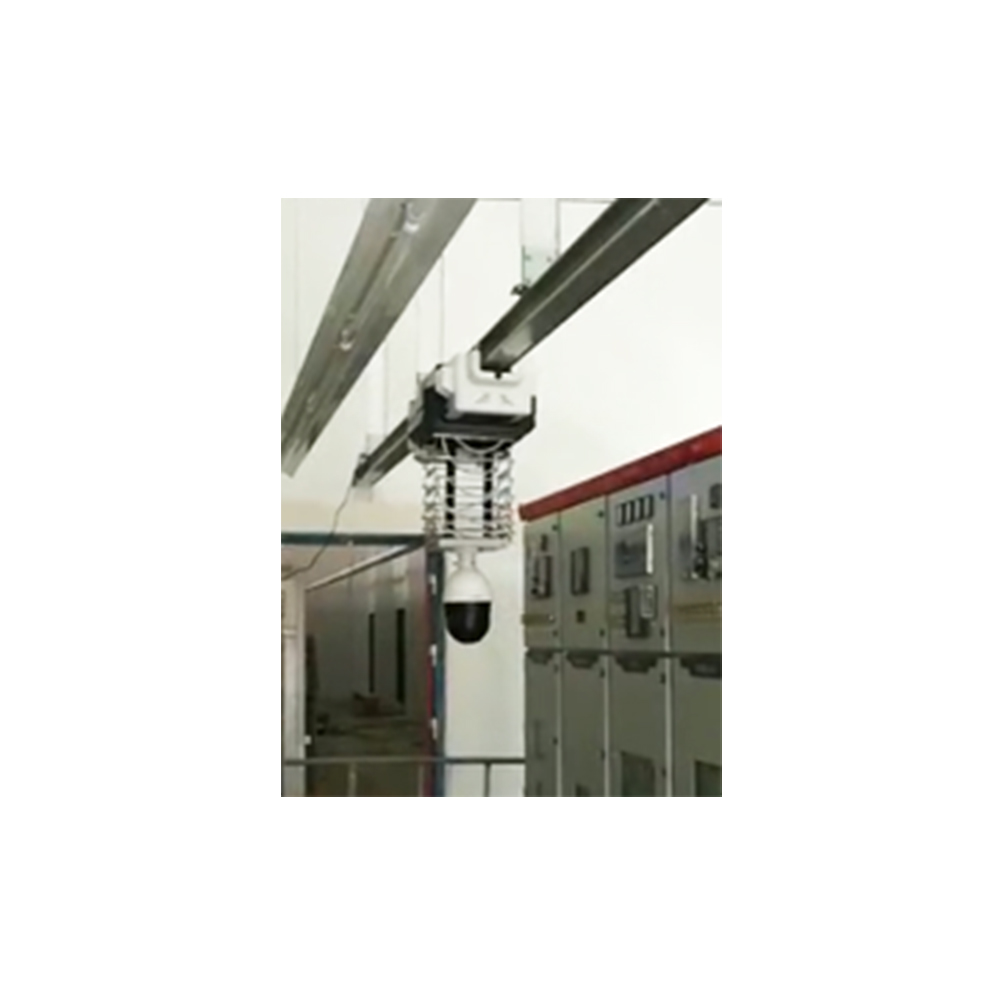
The Industrial Grade Rail-Guided Robot is a specialized intelligent inspection solution developed by IMS (Jinan) Robot Technology Co., Ltd., designed for long-distance, fixed-route inspection scenarios such as comprehensive utility tunnels, factory production lines, and power transmission rails. As a core product in IMS’s "intelligent terminal" portfolio, it operates along pre-installed rails (straight or curved), achieving continuous, high-precision inspection with 8-10km continuous operation capability and wireless charging support. Integrating image recognition, infrared thermal imaging, and real-time data transmission, this robot replaces manual patrols in narrow, closed, or long-distance environments (e.g., underground utility tunnels), significantly improving inspection efficiency and data accuracy. It is widely used in the power and municipal industries, and has become a key equipment for smart city infrastructure management.
Parameter Name | Specification |
Applicable Rail Type | Straight / Curved Rails |
Travel Speed | 0-1m/s (bidirectional, adjustable) |
Equipment Weight | ≤30kg |
Continuous Operation Range | 8-10km |
Power Supply Mode | Lithium Battery + Wireless Charging |
Lifting Stroke | Customizable (0-1.5m) |
Climbing Capacity | ≥10° |
Working Environment | Temperature: -20~60℃; Humidity: 5%~95% (non-condensing) |
Core Functions | Visible Light Real-Time Monitoring, Infrared Thermal Imaging, AI Image Recognition (leakage/corrosion), Remote Audio Intercom, Real-Time Alarm Push |
The robot is compatible with both straight and curved rails (common rail widths: 100-200mm), adapting to the layout of different industrial sites (e.g., linear factory production lines, curved underground utility tunnels). It supports bidirectional travel at an adjustable speed (0-1m/s), and can automatically reverse or stop at preset points (e.g., inspection stations, charging points) to ensure full coverage of the inspection route.
Equipped with a high-capacity lithium battery, the robot supports 8-10km of continuous operation—enough to cover the entire length of most utility tunnels or factory rails in one trip. It is also compatible with wireless charging systems: when the battery level drops below 20%, the robot automatically travels to the nearest wireless charging point, completing a full charge in 1.5-2 hours and resuming inspection without manual intervention.
Visible Light Camera: Equipped with a 4K high-definition camera with 10x optical zoom, capturing clear images of equipment details (e.g., valve labels, pipeline joints) even in low-light environments (supporting night vision mode).
Infrared Thermal Imager: Detects temperature differences on the surface of pipelines, cables, and electrical equipment (e.g., 20.7℃ to 45.0℃), identifying hidden faults such as poor insulation or blockages.
All images and thermal data are transmitted to the central platform in real time, enabling remote viewing and analysis.
The robot’s AI algorithm is specialized in industrial defect detection, capable of:
Identifying leakage (e.g., water stains on pipeline walls, oil seepage from valves) through image comparison.
Detecting corrosion and aging on metal surfaces (e.g., rust on rail brackets, cracking of insulation layers).
Recognizing abnormal states of equipment (e.g., loose bolts, damaged cable sheaths).
Once a defect is detected, the robot marks the location (e.g., "100m from the starting point of the utility tunnel") and sends an alarm to the central platform with attached images.
Integrated with a two-way audio intercom system, maintenance personnel can use the central platform to communicate with on-site personnel (e.g., guiding repairs) via the robot. In case of emergencies (e.g., gas leakage, fire), the robot can:
Activate a built-in sound and light alarm to warn on-site personnel.
Continuously upload real-time images and audio of the accident site to support remote command and decision-making.
The Industrial Grade Rail-Guided Robot is a core tool for smart infrastructure and industrial site management:
Municipal Utility Tunnels: Inspection of water supply, drainage, gas, and power pipelines in underground utility tunnels (e.g., in Beijing, Shanghai, and Guangzhou’s smart city projects), detecting leaks, corrosion, and blockages to avoid urban infrastructure failures.
Power Industry: Inspection of power transmission rails and cable trenches in power plants, monitoring cable temperature and insulation status to prevent electrical fires.
Factory Production Lines: Inspection of automated production line rails (e.g., automobile assembly lines), monitoring the operation status of conveyor belts, robotic arms, and other equipment, and detecting abnormalities such as deviation or jamming.
Petrochemical Industry: Inspection of long-distance oil and gas pipelines in closed workshops, detecting gas leaks and pipeline corrosion to ensure production safety.
A1: It can operate stably in an environment with a temperature of -20~60℃ and a relative humidity of 5%~95% (non-condensing), making it suitable for both underground utility tunnels (high humidity) and high-temperature factory workshops.
A2: Yes. The standard lifting stroke is 0-1m, but IMS can customize it to 0-1.5m according to user needs (e.g., to inspect high-position pipelines in utility tunnels or overhead cables in power plants).
A3: The robot uses encoder positioning (recording the number of rail rotations) and GPS/Beidou positioning (for outdoor rails) to track its location with an accuracy of ±5cm. It is also equipped with rail obstacle sensors: if an obstacle (e.g., a fallen tool) is detected on the rail, it will stop immediately and send an alert to the central platform.
A4: Yes. In case of temporary network failure, the robot can store inspection data (images, temperature records) locally (storage capacity: 128GB). Once the network is restored, it will automatically upload all offline data to the central platform, ensuring no data loss.
The Industrial Grade Rail-Guided Robot is a specialized intelligent inspection solution developed by IMS (Jinan) Robot Technology Co., Ltd., designed for long-distance, fixed-route inspection scenarios such as comprehensive utility tunnels, factory production lines, and power transmission rails. As a core product in IMS’s "intelligent terminal" portfolio, it operates along pre-installed rails (straight or curved), achieving continuous, high-precision inspection with 8-10km continuous operation capability and wireless charging support. Integrating image recognition, infrared thermal imaging, and real-time data transmission, this robot replaces manual patrols in narrow, closed, or long-distance environments (e.g., underground utility tunnels), significantly improving inspection efficiency and data accuracy. It is widely used in the power and municipal industries, and has become a key equipment for smart city infrastructure management.

Parameter Name | Specification |
Applicable Rail Type | Straight / Curved Rails |
Travel Speed | 0-1m/s (bidirectional, adjustable) |
Equipment Weight | ≤30kg |
Continuous Operation Range | 8-10km |
Power Supply Mode | Lithium Battery + Wireless Charging |
Lifting Stroke | Customizable (0-1.5m) |
Climbing Capacity | ≥10° |
Working Environment | Temperature: -20~60℃; Humidity: 5%~95% (non-condensing) |
Core Functions | Visible Light Real-Time Monitoring, Infrared Thermal Imaging, AI Image Recognition (leakage/corrosion), Remote Audio Intercom, Real-Time Alarm Push |
The robot is compatible with both straight and curved rails (common rail widths: 100-200mm), adapting to the layout of different industrial sites (e.g., linear factory production lines, curved underground utility tunnels). It supports bidirectional travel at an adjustable speed (0-1m/s), and can automatically reverse or stop at preset points (e.g., inspection stations, charging points) to ensure full coverage of the inspection route.
Equipped with a high-capacity lithium battery, the robot supports 8-10km of continuous operation—enough to cover the entire length of most utility tunnels or factory rails in one trip. It is also compatible with wireless charging systems: when the battery level drops below 20%, the robot automatically travels to the nearest wireless charging point, completing a full charge in 1.5-2 hours and resuming inspection without manual intervention.
Visible Light Camera: Equipped with a 4K high-definition camera with 10x optical zoom, capturing clear images of equipment details (e.g., valve labels, pipeline joints) even in low-light environments (supporting night vision mode).
Infrared Thermal Imager: Detects temperature differences on the surface of pipelines, cables, and electrical equipment (e.g., 20.7℃ to 45.0℃), identifying hidden faults such as poor insulation or blockages.
All images and thermal data are transmitted to the central platform in real time, enabling remote viewing and analysis.
The robot’s AI algorithm is specialized in industrial defect detection, capable of:
Identifying leakage (e.g., water stains on pipeline walls, oil seepage from valves) through image comparison.
Detecting corrosion and aging on metal surfaces (e.g., rust on rail brackets, cracking of insulation layers).
Recognizing abnormal states of equipment (e.g., loose bolts, damaged cable sheaths).
Once a defect is detected, the robot marks the location (e.g., "100m from the starting point of the utility tunnel") and sends an alarm to the central platform with attached images.
Integrated with a two-way audio intercom system, maintenance personnel can use the central platform to communicate with on-site personnel (e.g., guiding repairs) via the robot. In case of emergencies (e.g., gas leakage, fire), the robot can:
Activate a built-in sound and light alarm to warn on-site personnel.
Continuously upload real-time images and audio of the accident site to support remote command and decision-making.
The Industrial Grade Rail-Guided Robot is a core tool for smart infrastructure and industrial site management:
Municipal Utility Tunnels: Inspection of water supply, drainage, gas, and power pipelines in underground utility tunnels (e.g., in Beijing, Shanghai, and Guangzhou’s smart city projects), detecting leaks, corrosion, and blockages to avoid urban infrastructure failures.
Power Industry: Inspection of power transmission rails and cable trenches in power plants, monitoring cable temperature and insulation status to prevent electrical fires.
Factory Production Lines: Inspection of automated production line rails (e.g., automobile assembly lines), monitoring the operation status of conveyor belts, robotic arms, and other equipment, and detecting abnormalities such as deviation or jamming.
Petrochemical Industry: Inspection of long-distance oil and gas pipelines in closed workshops, detecting gas leaks and pipeline corrosion to ensure production safety.
A1: It can operate stably in an environment with a temperature of -20~60℃ and a relative humidity of 5%~95% (non-condensing), making it suitable for both underground utility tunnels (high humidity) and high-temperature factory workshops.
A2: Yes. The standard lifting stroke is 0-1m, but IMS can customize it to 0-1.5m according to user needs (e.g., to inspect high-position pipelines in utility tunnels or overhead cables in power plants).
A3: The robot uses encoder positioning (recording the number of rail rotations) and GPS/Beidou positioning (for outdoor rails) to track its location with an accuracy of ±5cm. It is also equipped with rail obstacle sensors: if an obstacle (e.g., a fallen tool) is detected on the rail, it will stop immediately and send an alert to the central platform.
A4: Yes. In case of temporary network failure, the robot can store inspection data (images, temperature records) locally (storage capacity: 128GB). Once the network is restored, it will automatically upload all offline data to the central platform, ensuring no data loss.