| Availability: | |
|---|---|
The Long-Range Medium Wave Thermal Camera (MWIR) is a high-performance imaging system equipped with a cooled detector and precision long-focal-length optics. It delivers exceptional sensitivity and clear imaging across extended distances, operating independently of visible light for 24/7 reliability. The medium wave infrared (3–5μm) band offers natural atmospheric transmission advantages, enabling penetration of smoke, haze, and coastal humidity—challenges that hinder standard thermal cameras. Designed for critical applications such as border surveillance, coastal defense, and critical infrastructure protection, this camera provides early detection and accurate identification of distant targets, supporting proactive security and operational decision-making.
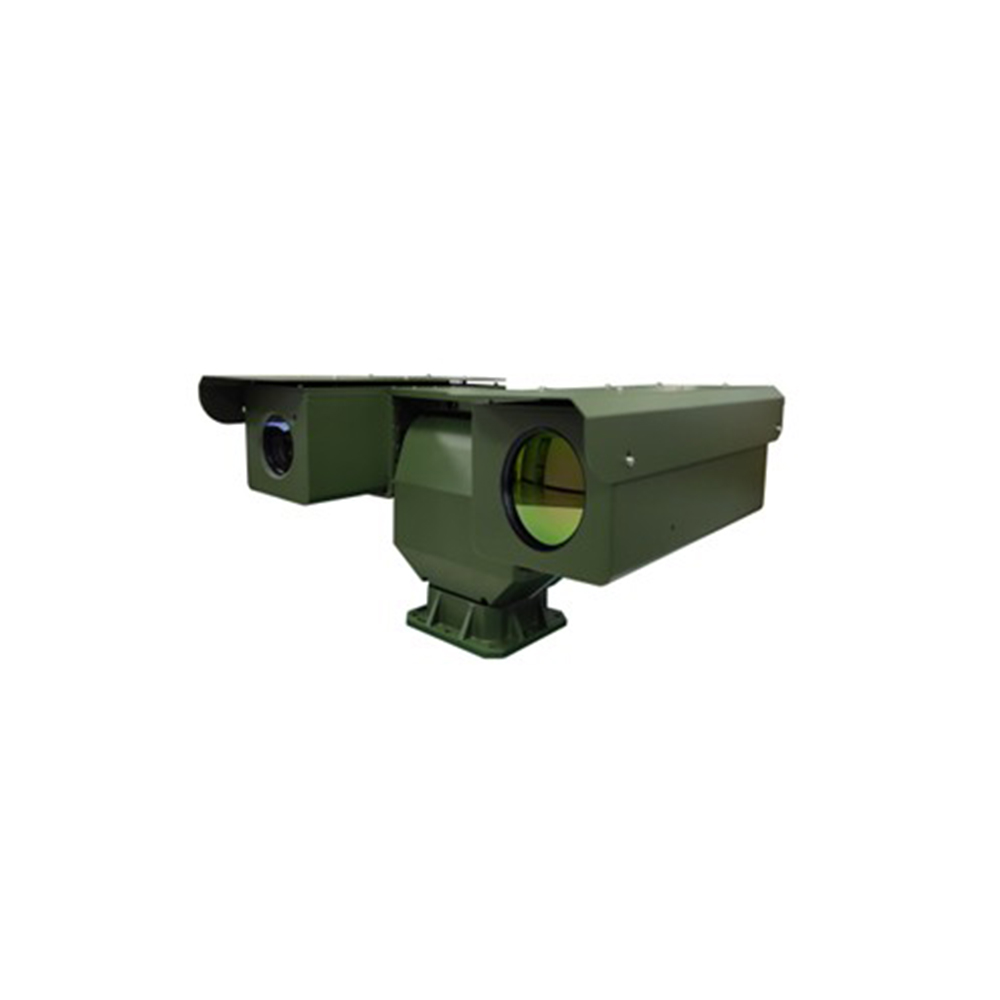
Leveraging a cooled MWIR detector and long-focal-length optics (up to 500mm), the camera achieves clear detection and recognition of targets at distances up to 10km (for large vehicles) and 3km (for human-sized targets). The mid-wave band’s atmospheric transmission efficiency ensures superior performance compared to long-wave thermal cameras in long-range scenarios.
Offers excellent noise suppression and high contrast, enabling precise target differentiation even in complex backgrounds. The cooled detector provides a noise equivalent temperature difference (NETD) of <20mK, capturing minute temperature variations for detailed imagery with enhanced edge definition. Advanced image processing algorithms further improve clarity, ensuring accurate target identification at extended ranges.
Operating independently of visible light, the camera performs reliably day and night. It penetrates smoke, haze, fog, and coastal humidity, maintaining image clarity in low-visibility environments such as sandstorms, dust, and maritime atmospheres. It operates in temperature ranges from -40℃ to 60℃, with IP67-rated protection against dust and water.
Supports intelligent video analytics, automatic target tracking, and multi-sensor data fusion. The open architecture enables seamless integration with electro-optical platforms, radar systems, and security networks, creating comprehensive monitoring and early warning solutions. It outputs standard video formats (HDMI, SDI, IP) for easy integration with existing control systems.
Offers small-batch customization tailored to mission profiles, operational environments, and budget. Customizable components include optical configurations (focal length, field of view), detector types (cooled MWIR variants), platform integration (fixed, pan-tilt, vehicle-mounted), and software functions (custom analytics, alert triggers).
Ideal for border surveillance, the camera detects and identifies targets from kilometers away, day or night, in challenging conditions. It prevents illegal crossings, smuggling, and potential military threats by providing continuous, wide-area coverage. Integrated with radar and command platforms, it forms a multi-layer defense system for border protection.
In maritime operations, the camera penetrates fog and humid conditions to monitor vessels, small boats, and suspicious activities. It provides early warning for ports, waterways, and coastal defense lines, detecting targets at distances beyond visual range. Networked with shore-based monitoring centers, it ensures 24/7 maritime security and enhanced situational awareness.
Secures airports, ports, pipelines, power plants, and government facilities with long-range monitoring and intelligent analytics. It identifies potential threats (unauthorized access, sabotage attempts) and equipment anomalies (overheating, leaks) early, preventing costly downtime and security breaches. The open architecture integrates seamlessly with existing security systems for unified protection.
Supports wildlife protection, forest fire prevention, and wetland observation with long-range, non-intrusive imaging. It detects forest fires in early stages (before visible smoke) and monitors wildlife movements without disturbing natural habitats. Researchers and environmental agencies benefit from accurate, real-time thermal data to enhance conservation efforts.
Enhances monitoring of highways, waterways, bridges, and tunnels, operating effectively in low-visibility conditions. It detects accidents, unauthorized movements, and anomalies such as vehicle overheating, enabling rapid response from authorities. This ensures traffic safety and strengthens the security of vital transportation networks.
MWIR cameras use a cooled detector and operate in the 3–5μm band, offering superior long-range performance and atmospheric penetration. LWIR cameras (8–14μm) are uncooled, lower-cost, but less effective in long-range or haze-prone environments. MWIR is ideal for critical long-range surveillance needs.
A standard configuration with a 300mm focal length detects human-sized targets at 3km and recognizes them at 1.5km. Longer focal lengths (up to 500mm) extend recognition range to 2.5km.
Yes, it is designed for seamless integration with pan-tilt-zoom (PTZ) platforms, including U-shaped pan tilts and gyro-stabilized systems. This enables automated scanning, target tracking, and wide-area coverage.
Typical power consumption is 25–40W (depending on detector and optics), supporting operation with 12V/24V DC power supplies. It can be powered by batteries for portable deployments or hardwired for fixed installations.
The Long-Range Medium Wave Thermal Camera (MWIR) is a high-performance imaging system equipped with a cooled detector and precision long-focal-length optics. It delivers exceptional sensitivity and clear imaging across extended distances, operating independently of visible light for 24/7 reliability. The medium wave infrared (3–5μm) band offers natural atmospheric transmission advantages, enabling penetration of smoke, haze, and coastal humidity—challenges that hinder standard thermal cameras. Designed for critical applications such as border surveillance, coastal defense, and critical infrastructure protection, this camera provides early detection and accurate identification of distant targets, supporting proactive security and operational decision-making.

Leveraging a cooled MWIR detector and long-focal-length optics (up to 500mm), the camera achieves clear detection and recognition of targets at distances up to 10km (for large vehicles) and 3km (for human-sized targets). The mid-wave band’s atmospheric transmission efficiency ensures superior performance compared to long-wave thermal cameras in long-range scenarios.
Offers excellent noise suppression and high contrast, enabling precise target differentiation even in complex backgrounds. The cooled detector provides a noise equivalent temperature difference (NETD) of <20mK, capturing minute temperature variations for detailed imagery with enhanced edge definition. Advanced image processing algorithms further improve clarity, ensuring accurate target identification at extended ranges.
Operating independently of visible light, the camera performs reliably day and night. It penetrates smoke, haze, fog, and coastal humidity, maintaining image clarity in low-visibility environments such as sandstorms, dust, and maritime atmospheres. It operates in temperature ranges from -40℃ to 60℃, with IP67-rated protection against dust and water.
Supports intelligent video analytics, automatic target tracking, and multi-sensor data fusion. The open architecture enables seamless integration with electro-optical platforms, radar systems, and security networks, creating comprehensive monitoring and early warning solutions. It outputs standard video formats (HDMI, SDI, IP) for easy integration with existing control systems.
Offers small-batch customization tailored to mission profiles, operational environments, and budget. Customizable components include optical configurations (focal length, field of view), detector types (cooled MWIR variants), platform integration (fixed, pan-tilt, vehicle-mounted), and software functions (custom analytics, alert triggers).
Ideal for border surveillance, the camera detects and identifies targets from kilometers away, day or night, in challenging conditions. It prevents illegal crossings, smuggling, and potential military threats by providing continuous, wide-area coverage. Integrated with radar and command platforms, it forms a multi-layer defense system for border protection.
In maritime operations, the camera penetrates fog and humid conditions to monitor vessels, small boats, and suspicious activities. It provides early warning for ports, waterways, and coastal defense lines, detecting targets at distances beyond visual range. Networked with shore-based monitoring centers, it ensures 24/7 maritime security and enhanced situational awareness.
Secures airports, ports, pipelines, power plants, and government facilities with long-range monitoring and intelligent analytics. It identifies potential threats (unauthorized access, sabotage attempts) and equipment anomalies (overheating, leaks) early, preventing costly downtime and security breaches. The open architecture integrates seamlessly with existing security systems for unified protection.
Supports wildlife protection, forest fire prevention, and wetland observation with long-range, non-intrusive imaging. It detects forest fires in early stages (before visible smoke) and monitors wildlife movements without disturbing natural habitats. Researchers and environmental agencies benefit from accurate, real-time thermal data to enhance conservation efforts.
Enhances monitoring of highways, waterways, bridges, and tunnels, operating effectively in low-visibility conditions. It detects accidents, unauthorized movements, and anomalies such as vehicle overheating, enabling rapid response from authorities. This ensures traffic safety and strengthens the security of vital transportation networks.
MWIR cameras use a cooled detector and operate in the 3–5μm band, offering superior long-range performance and atmospheric penetration. LWIR cameras (8–14μm) are uncooled, lower-cost, but less effective in long-range or haze-prone environments. MWIR is ideal for critical long-range surveillance needs.
A standard configuration with a 300mm focal length detects human-sized targets at 3km and recognizes them at 1.5km. Longer focal lengths (up to 500mm) extend recognition range to 2.5km.
Yes, it is designed for seamless integration with pan-tilt-zoom (PTZ) platforms, including U-shaped pan tilts and gyro-stabilized systems. This enables automated scanning, target tracking, and wide-area coverage.
Typical power consumption is 25–40W (depending on detector and optics), supporting operation with 12V/24V DC power supplies. It can be powered by batteries for portable deployments or hardwired for fixed installations.